My Barrel Sauna After 3 Years: An Honest Review from Japan
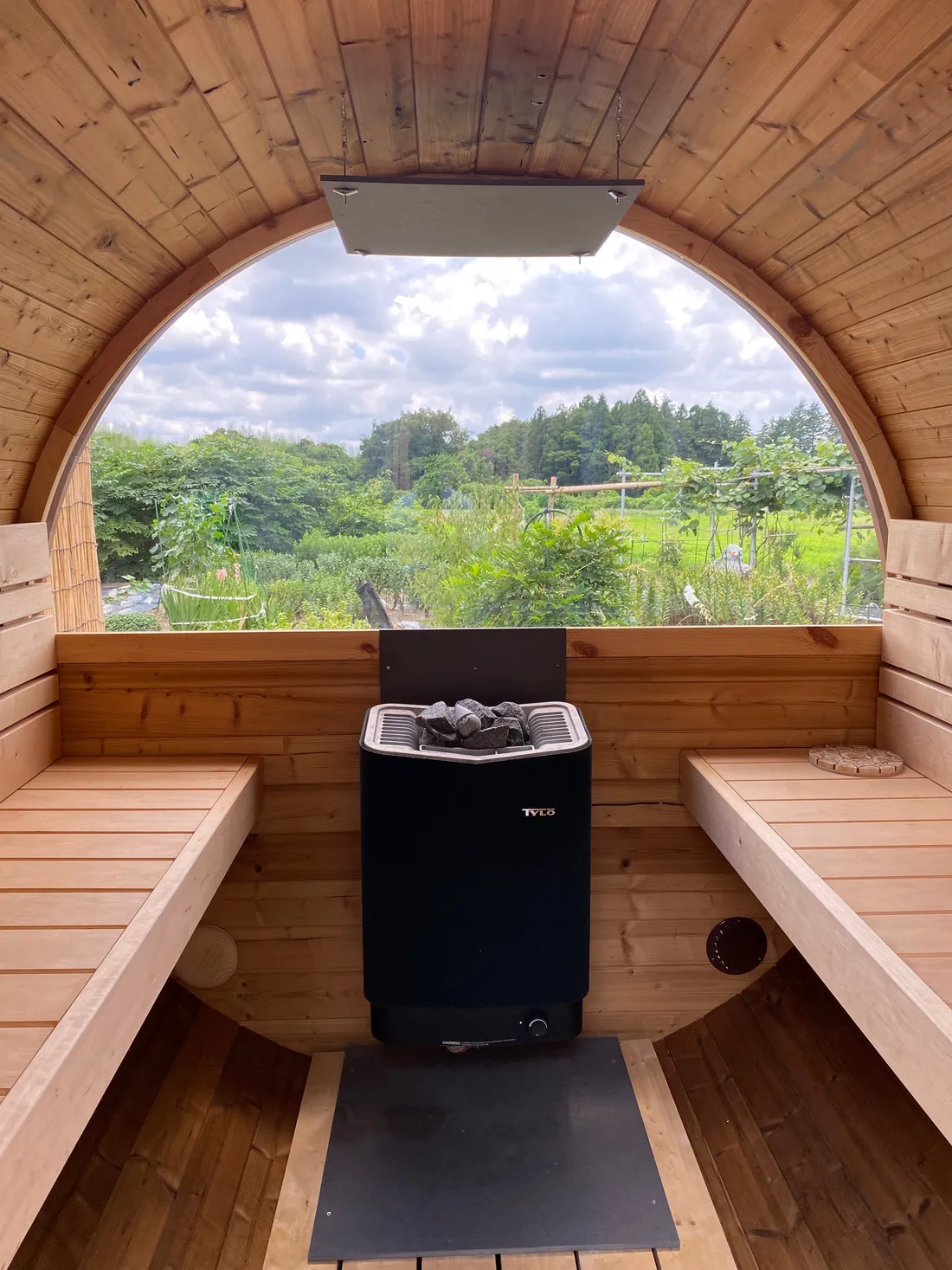
The short version: I bought a 4-person Estonian-built barrel sauna in 2023, and it has quietly become the center of my family’s and friends’ social life. Three years in, my total maintenance issues amount to one dead LED light and some faded paint. If you’re on the fence about a barrel sauna, this is everything I know — including the costs nobody talks about.
What I bought (and what it actually cost)
Here’s my full setup, with real numbers converted to USD:
| Item | Cost (JPY) | Approx. USD |
|---|---|---|
| Tesler barrel sauna (Estonia, 4-person) | ¥1,500,000 | ~$10,000 |
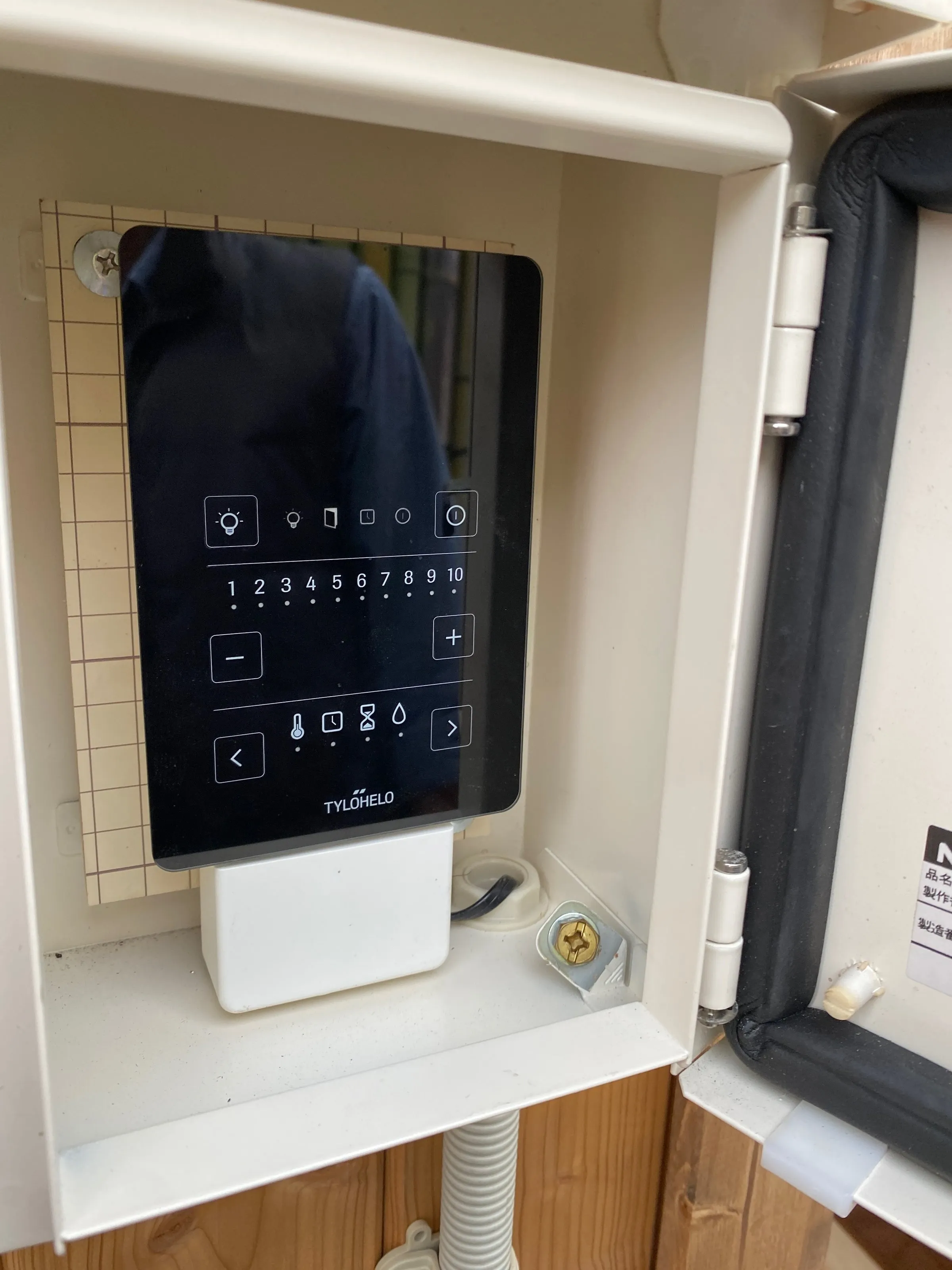
| Tylö Pure electric heater (panel control) ¹ | ¥800,000 | ~$5,300 |
| Electrical line upgrade | (extra) | see below |
| Cast-iron cold plunge tub (Yamato, 40L “goemon” style) | ¥260,000 | ~$1,700 |
| Professional assembly (5-person crew, 1 day) | (included/quoted separately) | — |
¹ Tylö Pure, 8kW — oversized for this barrel. Acquired secondhand from a sauna facility; a standard 4–6kW unit is what most barrel packages include. It’s a big reason my heat-up and löyly run stronger than a stock package would — more on that here.
The sauna is made by Tesler, an Estonian manufacturer — Estonia being where a huge share of the world’s barrel saunas actually come from. I purchased mine through totonoü, a Japanese distributor. (They’ve since switched to carrying Auroom saunas, another Estonian brand with a further-refined version of the same concept.)
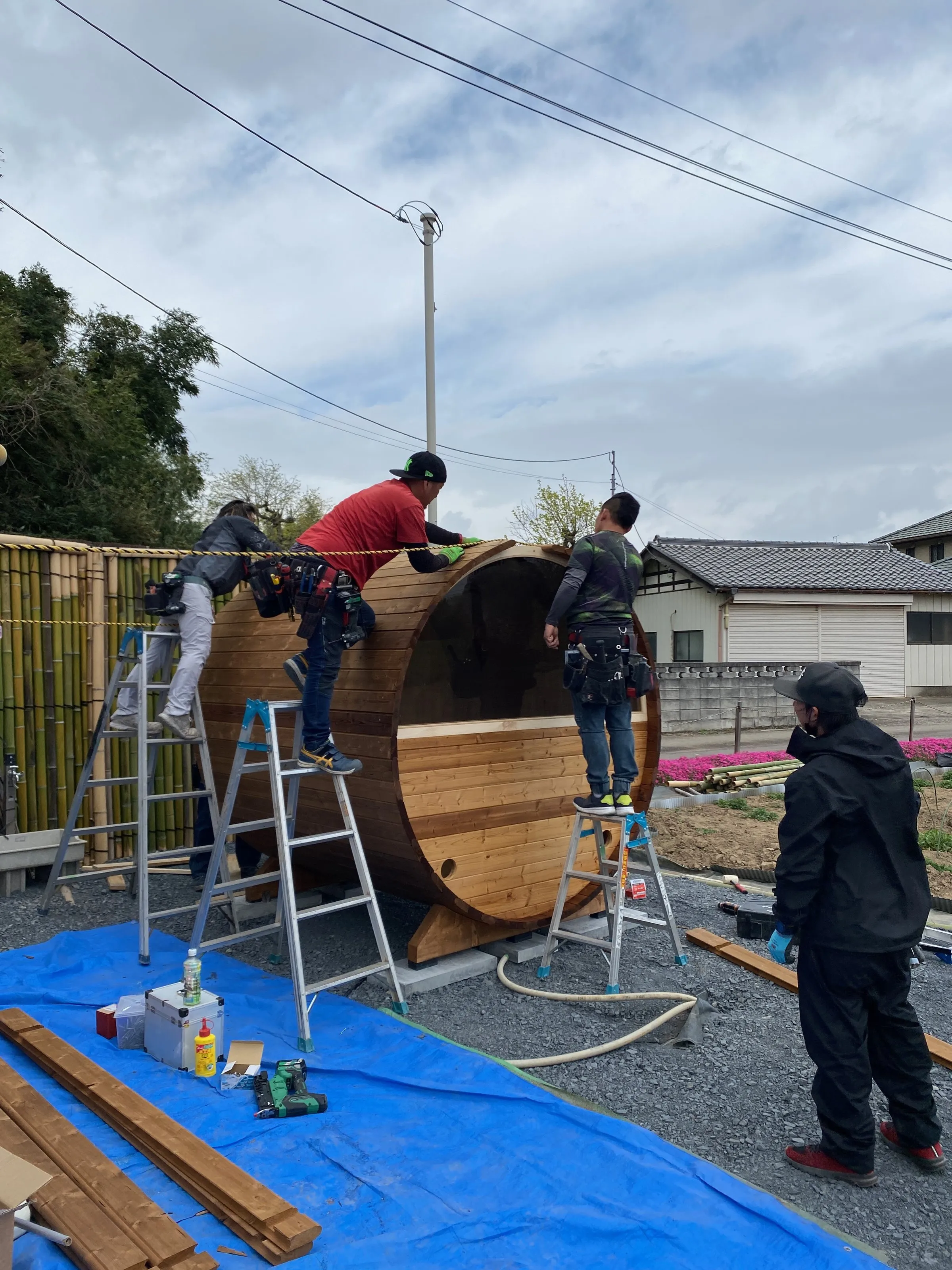
I had a fixed camera running the entire build — here’s the whole day in 90 seconds:
The cost nobody warns you about: my home’s electrical capacity wasn’t enough for the heater. We had to run a new power line — literally installing a new pole. If you’re considering an electric heater in the 6–8kW range, check your electrical panel before you order, not after. This is the single most common surprise cost I’ve seen other owners hit too.
Heat-up time and real temperatures
- Time to sauna-ready: about 20 minutes. This surprises people. Barrel saunas heat fast because the curved shape means there’s very little dead air volume — no wasted corners to heat.
- My normal session: around 90°C (194°F). That’s properly hot — hotter than most gym saunas in the US run.
- Maximum I’ve recorded: 110°C (230°F). I don’t recommend it for beginners, but the Tylö Pure gets there.
For comparison: friends with cabin-style saunas report 40–60 minute heat-up times. The barrel shape isn’t just aesthetics; it’s thermal efficiency you feel every single session.
What it costs to run
I use the sauna 1–2 times a month, and it adds roughly ¥3,000 (~$20) to my monthly electricity bill. Divided across that few sessions it’s roughly $10–20 each — but most of that is the fixed base rate I’d pay regardless, and it’s about the cost of a single entry at a Japanese sauna facility, with no drive.
If you sauna weekly or more, scale accordingly, but the “electric saunas are expensive to run” fear is overblown at hobby-usage frequency. The heater only runs 20 minutes to heat plus session time.
Maintenance after 3 years: almost boringly reliable
Here is my complete list of problems since April 2023:
- One LED light died. That’s it. That’s the mechanical failure list.
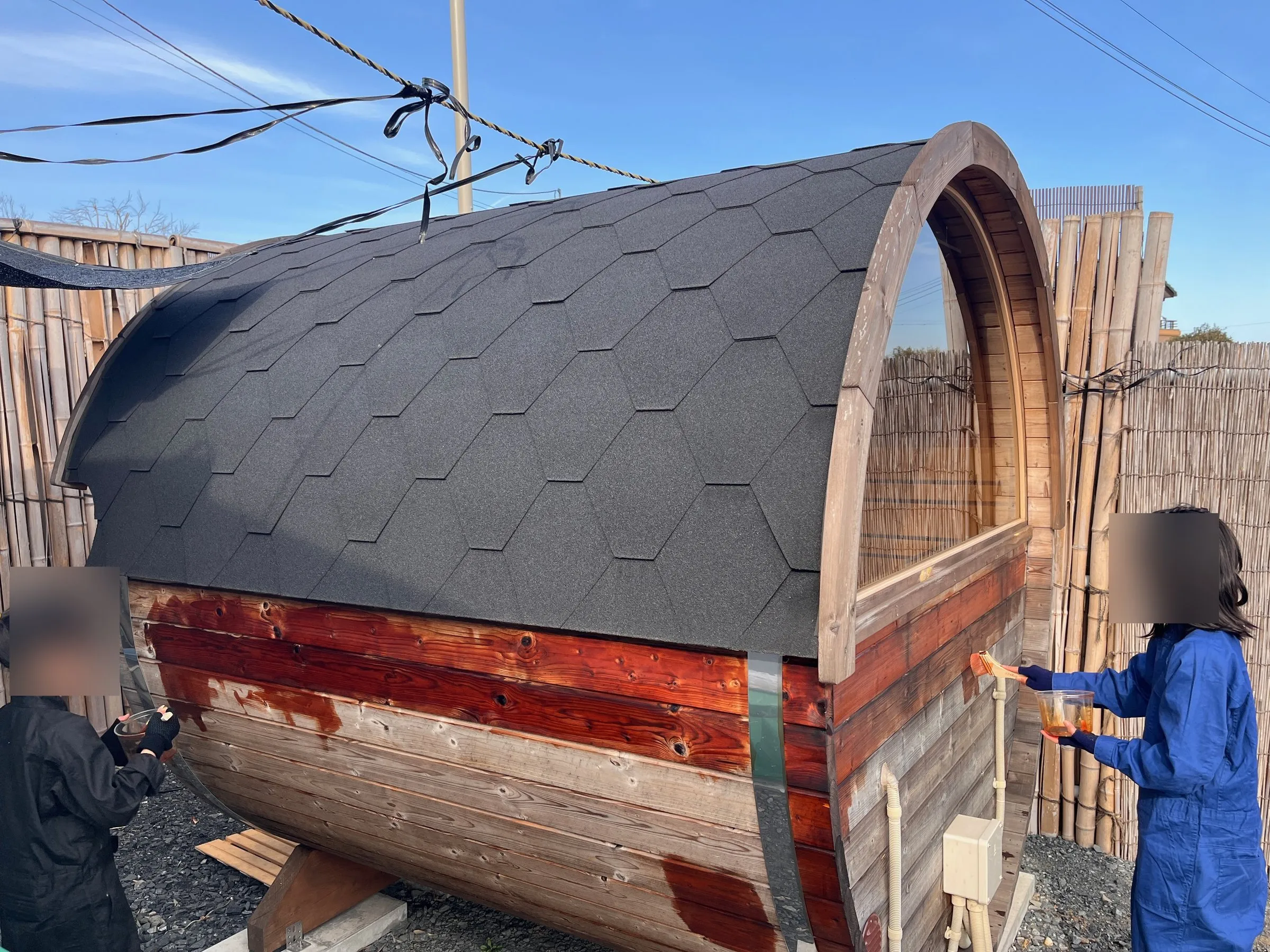
- The exterior paint faded. Japanese summers are brutal — high UV, high humidity, typhoon rain. After two years the original color had visibly dulled.
The paint became a family project: my kids and I repainted the whole barrel together over a weekend, using the same Estonian-made paint the manufacturer uses. Honestly, it turned into one of my favorite memories with the sauna — which tells you something about what owning one of these is actually like.
What I do routinely: ventilate after every session (doors open), occasional interior wipe-down, and that’s genuinely it. Estonian spruce handles Japanese humidity better than I expected — and if it survives here, it will survive almost anywhere in the continental US.
The cold plunge setup: cast iron and countryside air
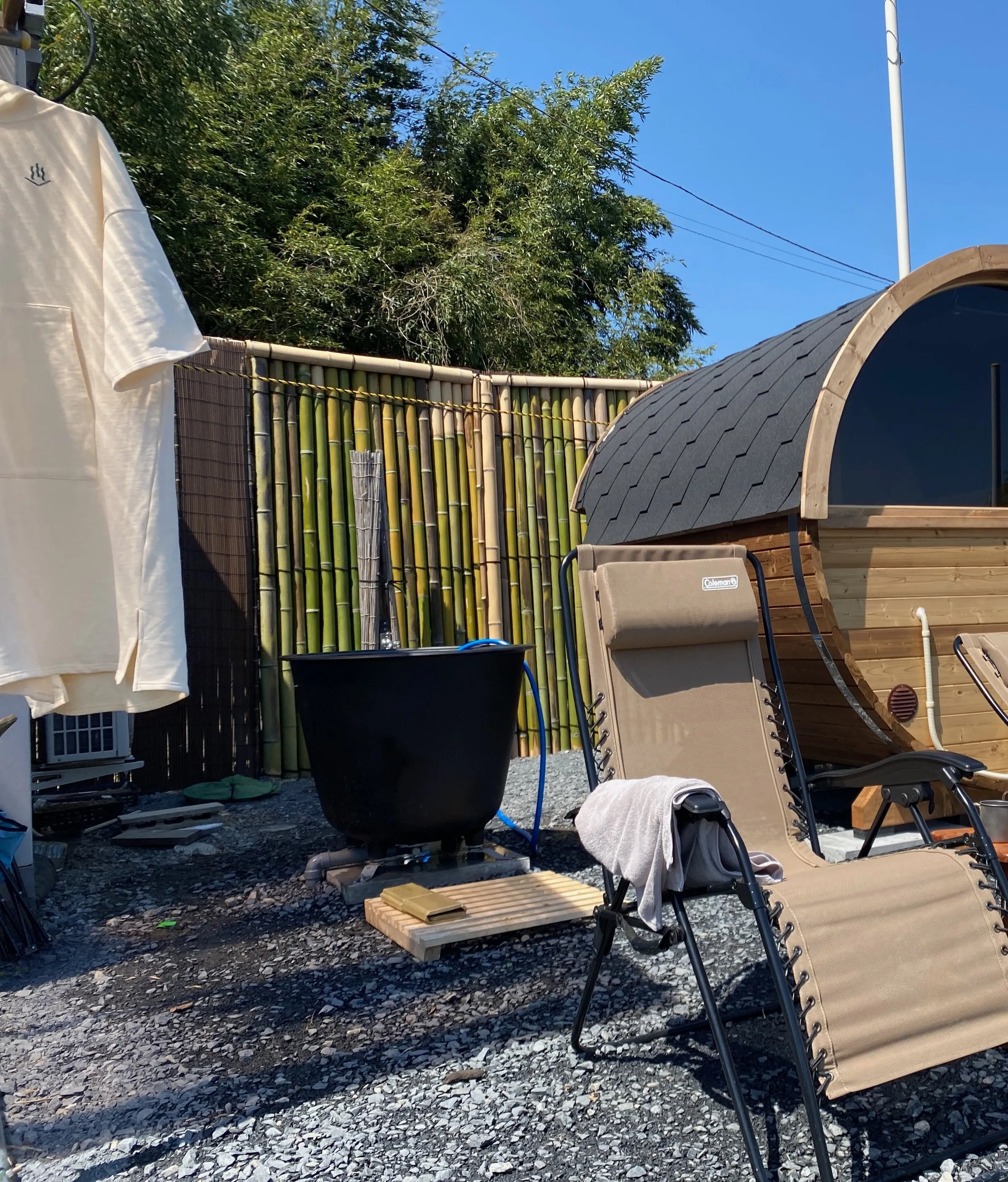
Instead of a chiller system, I use a 40-liter cast-iron tub — a traditional Japanese “goemon” bathtub — filled with plain tap water. No cooling equipment at all.
Does it work? Absolutely. Straight-from-the-tap water in Japan runs cold enough for a proper contrast plunge most of the year. A $1,700 cast-iron tub with zero running costs versus a $5,000+ chiller system is a trade worth considering, especially if your local tap water runs below 20°C (68°F).
After the plunge comes what Japanese sauna culture calls gaikiyoku — outdoor air bathing. I use a zero-gravity infinity chair, and living in the countryside, the natural breeze does what no spa can replicate. This rest phase is where totonou happens — the Japanese term for the almost meditative, fully-reset state that’s the entire point of the sauna-plunge-rest cycle.
What actually surprised me: it’s a social machine
I expected a wellness gadget. What I got was a gathering place.
Yes, I sometimes sauna alone. But most sessions are with friends, their families, or my own family, and the sauna has spawned rituals I never planned:
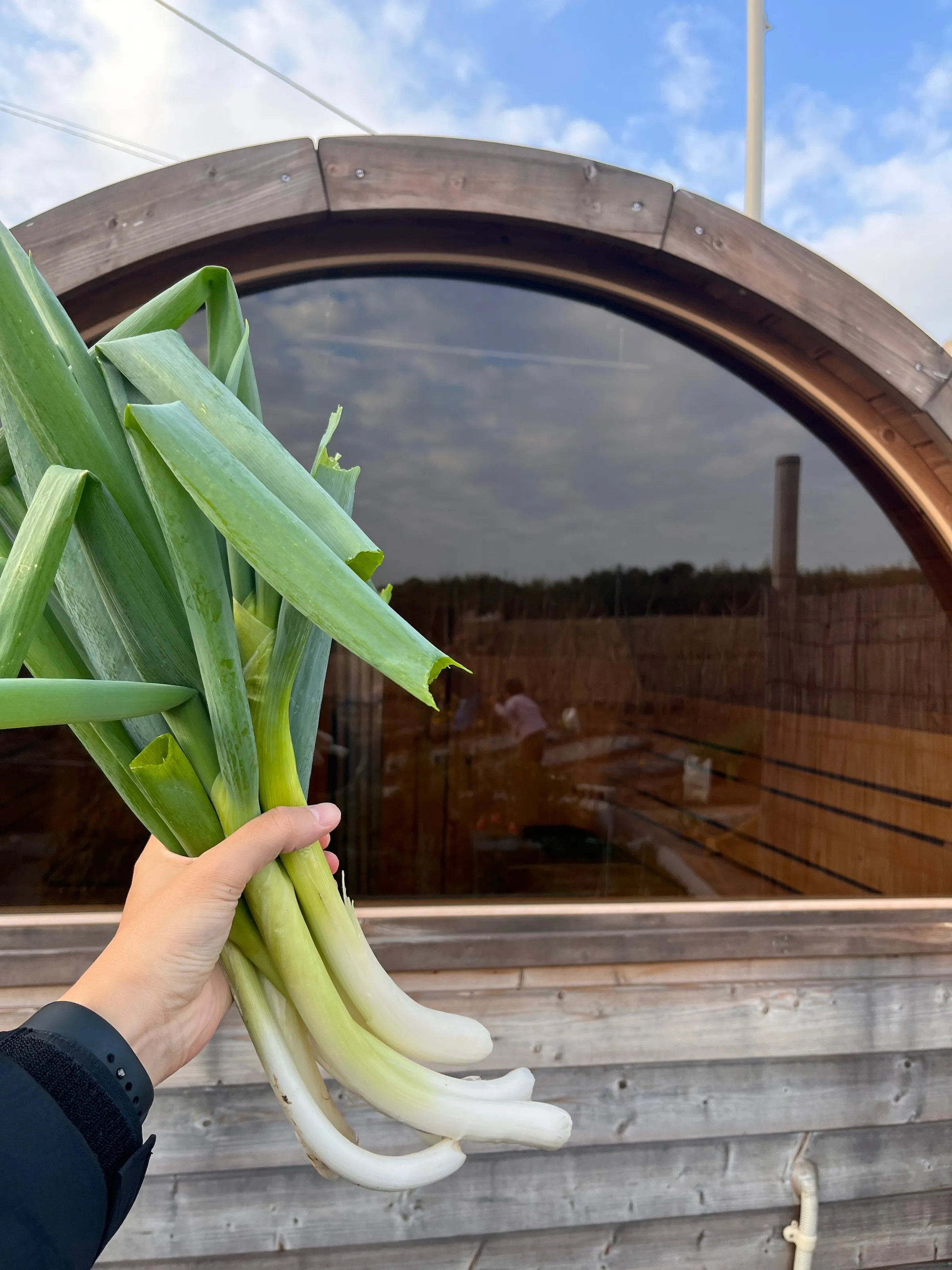
- BBQ + sauna days. Grill going outside, rotating sauna rounds, kids running around. And here’s the part I can’t believe I get for free: the land around the sauna grows onions, garlic, leeks, potatoes, kiwi, and blueberries. We harvest and grill on the spot — call it sauna-to-table. Japanese fresh spring onions, pulled from the ground an hour before hitting the grill, are genuinely life-changing.
- The pool-tent setup. In summer we pitch a large tent with a kiddie pool under it. Children play in the pool; adults cycle through the sauna. Everyone wins.
- “Yonetsu no kai” — the afterglow session. This one is my favorite, and I’ve never seen it described in English. After the final sauna round, the barrel stays warm for a long time on residual heat. Three or four of us sit inside — no heater running, just gentle leftover warmth — with drinks, talking for an hour. It’s the sauna equivalent of embers after a bonfire. If you buy a barrel sauna and don’t do this, you’re leaving the best part on the table.
The crowd that shows up here is more varied than any spa’s: a lawyer who comes to clear his head, a pro basketball player, families with kids. And one group matters especially in Japan: friends with tattoos. Most Japanese bathhouses and sauna facilities still ban visible tattoos — a rule that shuts heavily-inked friends out of the country’s entire public sauna culture. My barrel has quietly become their sauna refuge. If you live somewhere with similar barriers (or just prefer privacy), a home sauna isn’t a luxury duplicate of what’s available in town — for some people it’s the only door in.
Honest downsides
To keep this review useful and not a love letter:
- Upfront cost is real. All-in, my setup crossed ¥2.5M (~$17,000) including electrical work. Kits in the US can be had cheaper, but budget 15–25% above sticker price for site prep and electrical.
- Electrical capacity is the hidden gotcha. Ask an electrician before ordering. Seriously.
- Exterior paint is not maintenance-free in harsh climates. Plan to repaint every 2–3 years (or embrace the weathered look).
- Finnish purists have real critiques of the barrel shape — low benches, more head-to-toe temperature difference than a tall room, and an ergonomic curve that’s better for lying than sitting. I hear them, and with a strong heater and proper löyly my sessions have never suffered for it — but if you’re optimizing purely for löyly physics, a purpose-built cabin sauna is the better instrument. I’m writing a full piece on this debate.
- 1–2 sessions a month is my honest usage — not the daily ritual I imagined when buying. That’s roughly 50–70 sessions over three years. Part of that is location: my sauna sits on family land in the countryside, a 25-minute drive from home. It’s a destination, not a backyard step away. The upside I didn’t expect: because going takes intention, every sauna day feels like a small event rather than a routine. But if daily use is your goal, put it where you live.
Verdict: worth it?
For me, unambiguously yes — but for a reason I didn’t anticipate. The heat, the totonou, the recovery benefits: all real. What made it a great purchase, though, is that it turned a quiet patch of family land into the place people want to gather. Three years and one dead LED later, I’d buy it again without hesitation.
The Finns have real, physics-based criticisms of barrel saunas — mostly correct, and worth reading before you buy: the case against my own sauna, taken seriously.
Questions about barrel sauna ownership, Japanese sauna culture, or my setup? I answer everything — get in touch.