Barrel Sauna Problems After 3 Years: What Broke, What Faded, and What Never Went Wrong
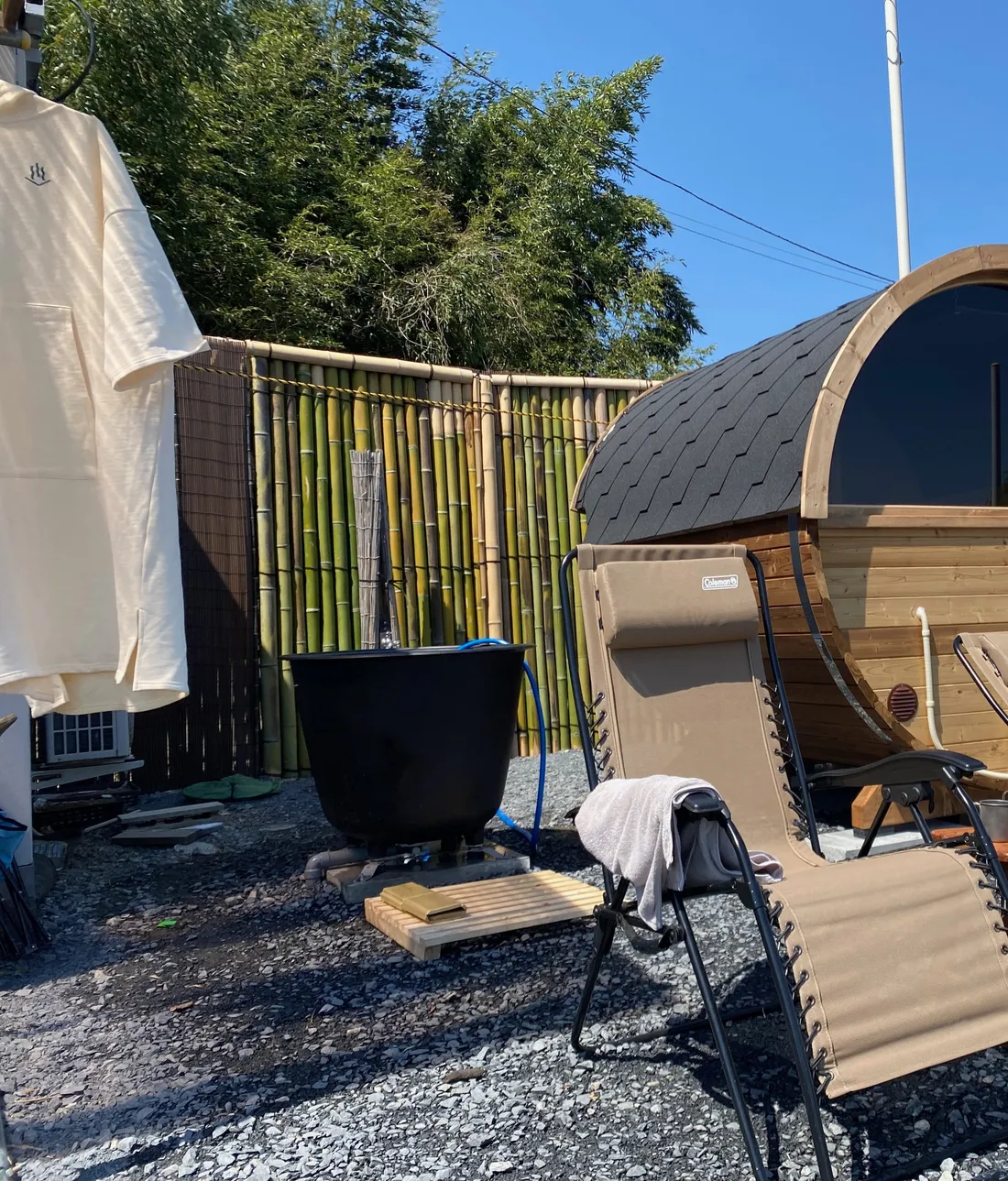
The short version: In three years of owning an Estonian-built barrel sauna in one of the harshest climates you can test wood in — Japanese summers with brutal UV, rainy-season humidity, and the occasional typhoon — my complete list of problems is: one dead LED light, faded exterior paint, and a surprise electrical bill before the sauna even arrived. Here’s every problem, honestly, plus the ones I expected that never happened.
Problem 1: The electrical capacity trap (before day one)
The biggest “problem” with my barrel sauna happened before it was even assembled: our property’s electrical capacity couldn’t handle the heater.
Electric sauna heaters in the 6–8kW class draw serious power. When we ordered the Tylö Pure, we discovered the existing supply wasn’t enough — and fixing it meant running a new power line to the site. Not rewiring a panel. A new line, with a pole.
If you’re considering an electric heater, do this in order:
- Find the heater’s kW rating and required breaker size
- Show it to an electrician before you order anything
- Get a quote for any upgrade and add it to your real budget
Budget-wise, assume site prep and electrical can add 15–25% on top of the sauna’s sticker price. Nobody puts this on the product page. It’s the single most common surprise I’ve seen other owners hit, and it hit me too.
Problem 2: One dead LED light
That’s it. That’s the mechanical failure list for three years.
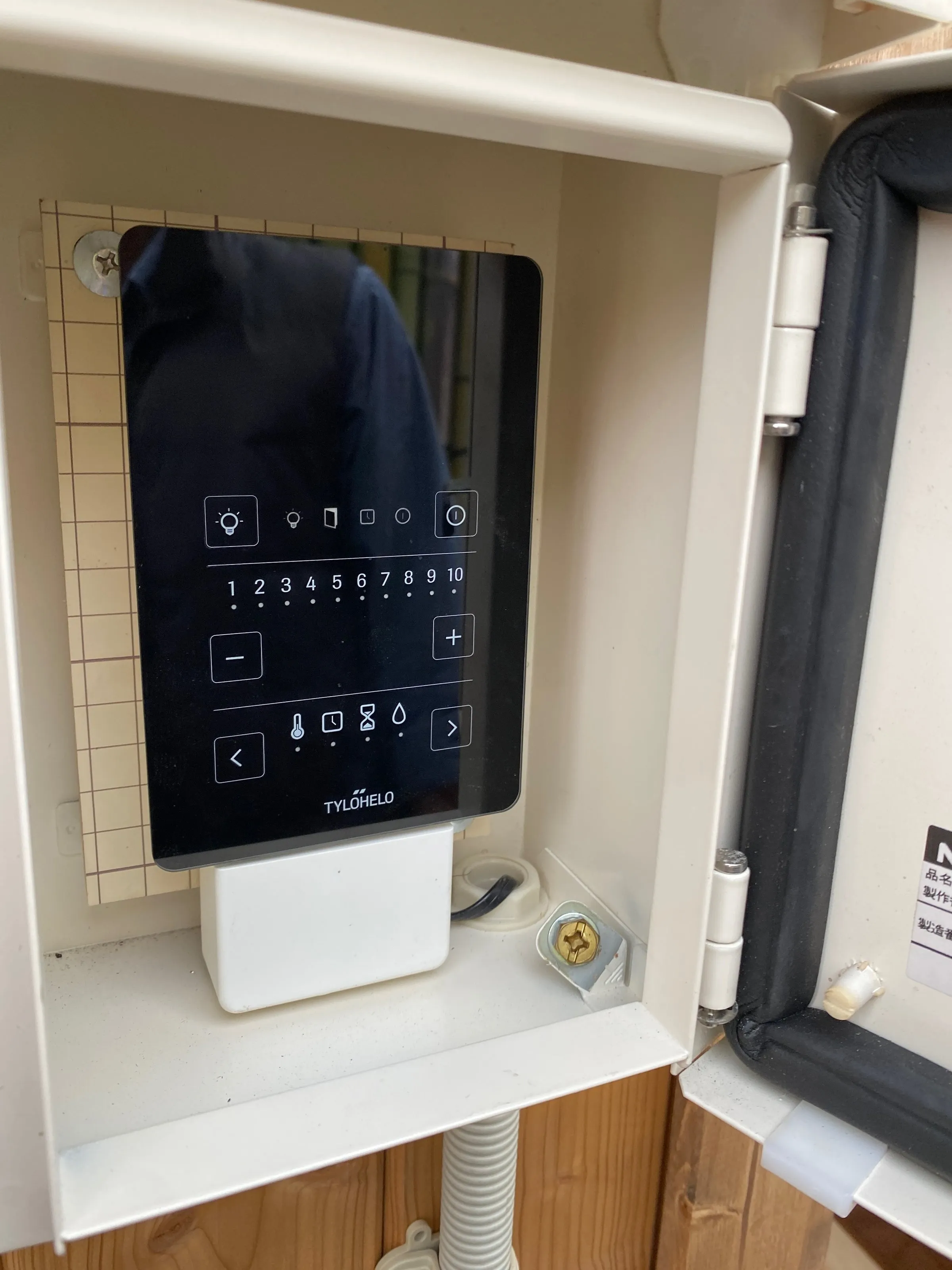
The interior LED light died somewhere in year two. Replacement was a simple swap. The heater — used at 90°C (194°F) regularly, pushed to 110°C (230°F) on occasion — has never faulted. The door still seals. The benches haven’t warped. The glass hasn’t cracked.
I keep waiting for something to break, and it keeps not breaking. Estonian factories have been making these barrels for a long time, and it shows.
Problem 3: The paint faded (and how we fixed it as a family)
This is the one real, visible aging issue — and if you live anywhere with strong sun, you will meet it too.
Japanese summers are merciless: intense UV, weeks of near-100% humidity, typhoon rain — and in our case, one more culprit I hadn’t anticipated: wind carrying fine dust from the surrounding fields, which wore at the finish like slow sandpaper. After about two years, the exterior paint had visibly dulled. The wood itself was fine; the color was not.
The fix became one of my favorite memories of owning this thing. My kids and I repainted the whole barrel over a weekend, using the same Estonian-made paint the manufacturer uses. Total cost: paint and a few brushes. Total damage to the sauna: zero.
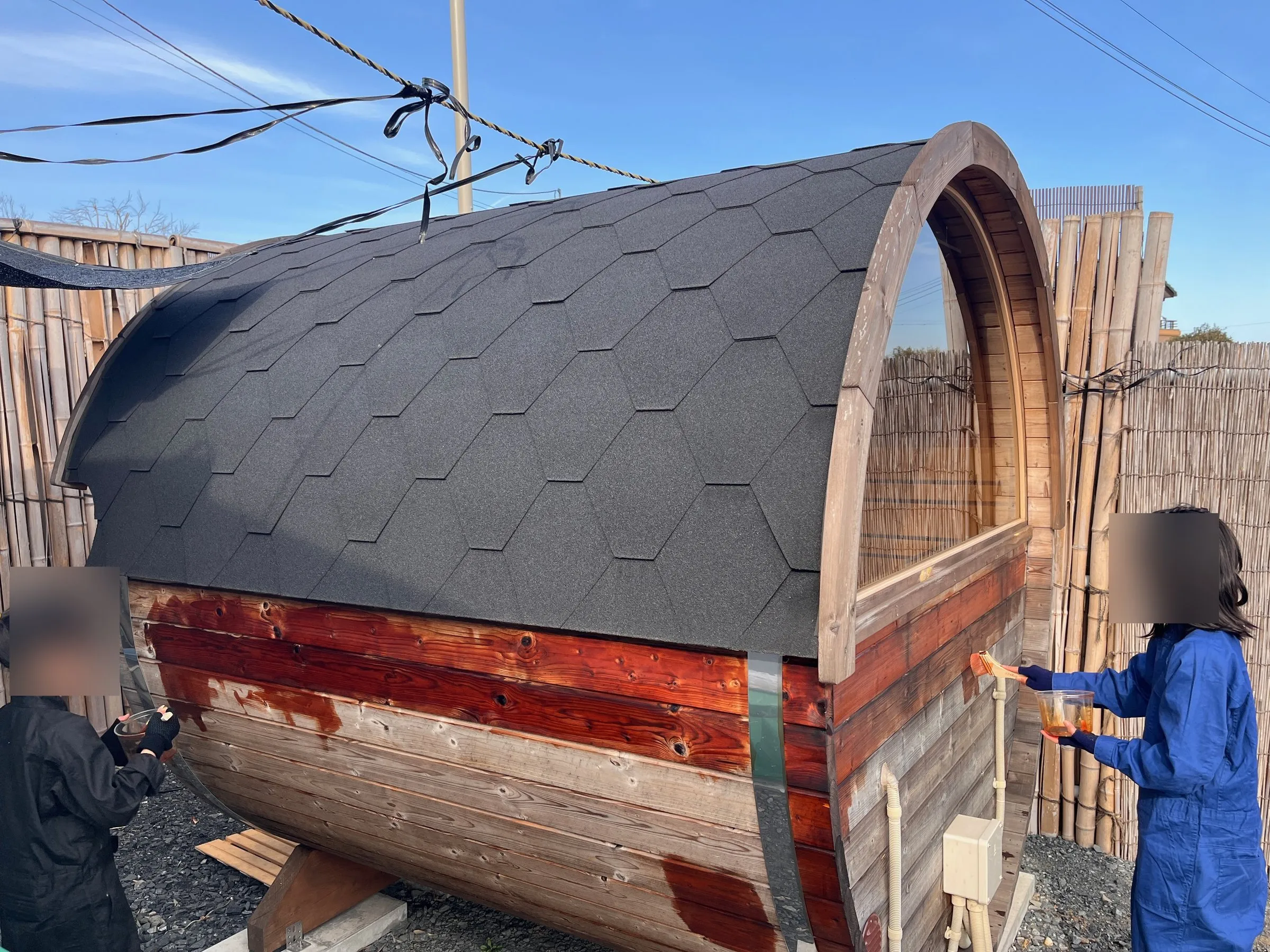
Plan for repainting every 2–3 years in harsh climates — or embrace the silver, weathered look, which plenty of owners genuinely prefer. Either is fine. Just don’t expect factory color forever without maintenance.
Problem 4: A wasp nest (updated July 2026)
I originally wrote in this article that the barrel’s shape meant no wasp nests — no eaves, nowhere to build. I was wrong, and I’m leaving my mistake visible rather than quietly editing it out.
In July 2026 I found a paper wasp nest on the sauna. It was small, but paper wasps sting, and I’ve been stung camping before — I wasn’t going to negotiate with them. I called a professional wasp removal service and had it dealt with properly.
The lesson isn’t about barrels; it’s about location. My sauna sits on family land surrounded by forest and vegetable fields. Wasps, spiders, and the occasional visitor from the treeline come with that territory, and they’d come to a cabin-shaped sauna too. If your sauna is in a rural or wooded setting: check it periodically, especially in summer, and if you find a nest, call a professional rather than improvising.
Cost of the removal: modest. Cost of getting stung while your friends watch: unmeasurable.
The problems I expected that never happened
Before buying, I worried about all of these. Three years of data says:
- Mold and rot: None. The barrel shape sheds water naturally, and my entire post-session routine — doors open to air out, a quick wipe of the benches with a dry towel — has kept the interior bone-dry. If spruce survives a Japanese rainy season, it will survive most backyards on Earth.
- Warping or gaps between staves: The barrel design uses tension bands that accommodate the wood’s expansion and contraction. Ours has stayed tight through three full summer-winter cycles.
- Typhoon damage: Several typhoons have passed through with zero damage — no shingle loss, no shifting. The real weather enemy surprised me: dust-laden winds. Our sauna sits by open fields, and constant gritty wind sandblasted the paint faster than sun alone would have. If your site is exposed and dusty, expect the repaint clock to run faster.
- Heater degradation: Heat-up time is still about 20 minutes to 90°C, same as day one.
What I’d tell a buyer worried about problems
- The real risks are before delivery, not after. Electrical capacity, foundation prep, and access for delivery are where budgets blow up. The sauna itself, if it’s from an established Estonian or Finnish factory, is the reliable part.
- Paint is maintenance, not failure. Budget a weekend every 2–3 years.
- Ventilate after every session. It’s the entire secret to avoiding mold, and it costs nothing.
- Buy from specialists. Our sauna was assembled by a crew that does nothing but sauna construction. Proper ventilation placement and a correctly seated stove aren’t things a general contractor necessarily gets right — and most “problems” I read about from other owners trace back to installation, not the product.
Verdict
Three years, one LED, one repaint. If that list disappoints you as an article about “problems,” good — that’s the honest answer to whether barrel saunas hold up. They do, provided you respect the two boring fundamentals: check your electrics before you buy, and let the thing breathe after you sweat.
The full 3-year ownership review — every cost, surprise, and ritual: read it here.
Have a specific worry about barrel sauna durability? Ask me — I’d rather answer from real experience than let you guess.