How Long Does a Barrel Sauna Take to Heat Up? My Real Numbers, Summer and Winter
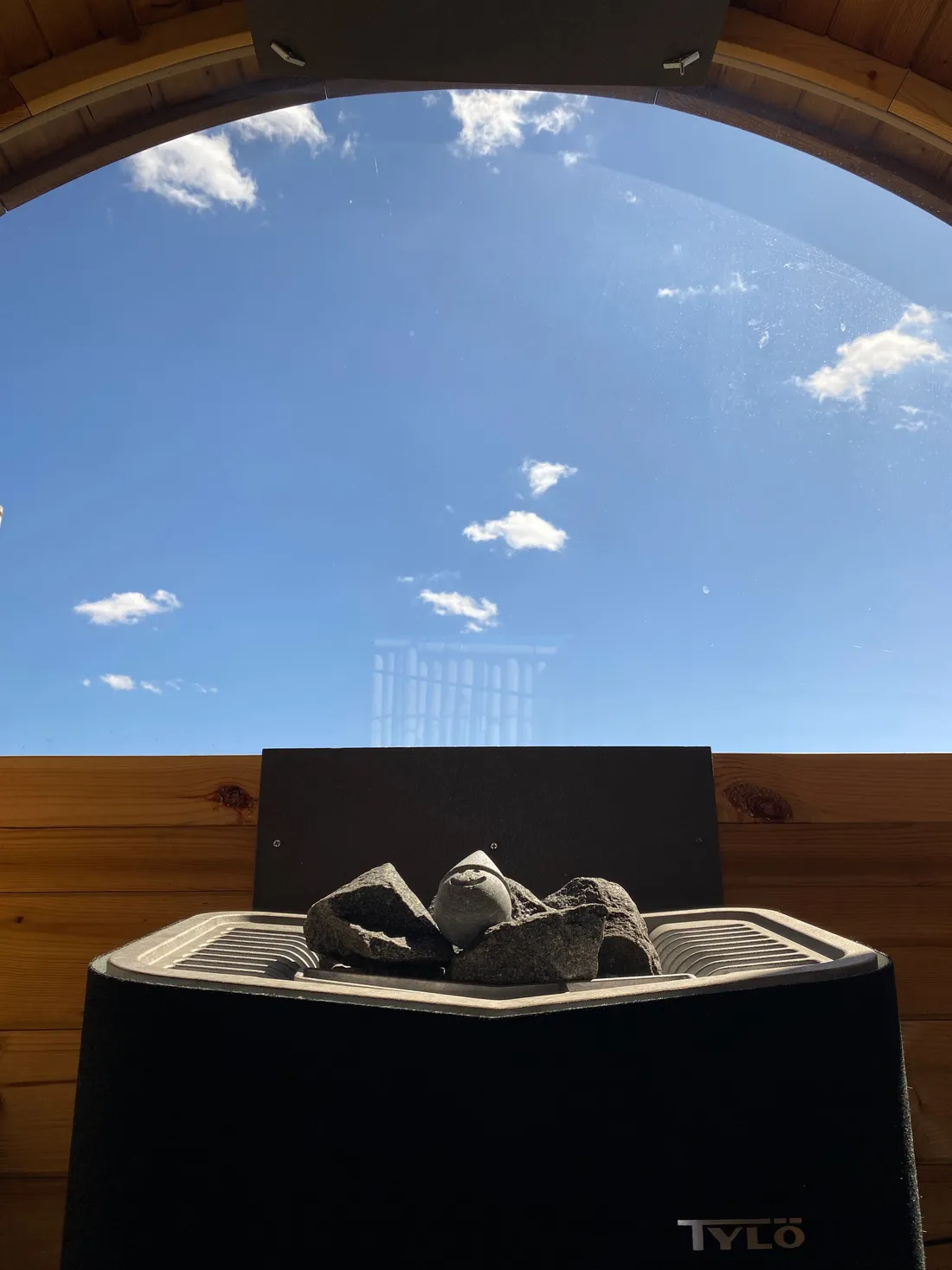
The short version: My 4-person Estonian barrel sauna with an electric Tylö Pure heater reaches 90°C (194°F) in about 20 minutes in summer, and 25–30 minutes in winter. That’s not a brochure claim — it’s three years of switching the thing on and waiting. Here’s why barrels heat this fast, what affects the time, and how to build a routine around it.
The real numbers
| Condition | Time to 90°C (194°F) |
|---|---|
| Summer (warm start) | ~20 minutes |
| Winter (cold start) | ~25–30 minutes |
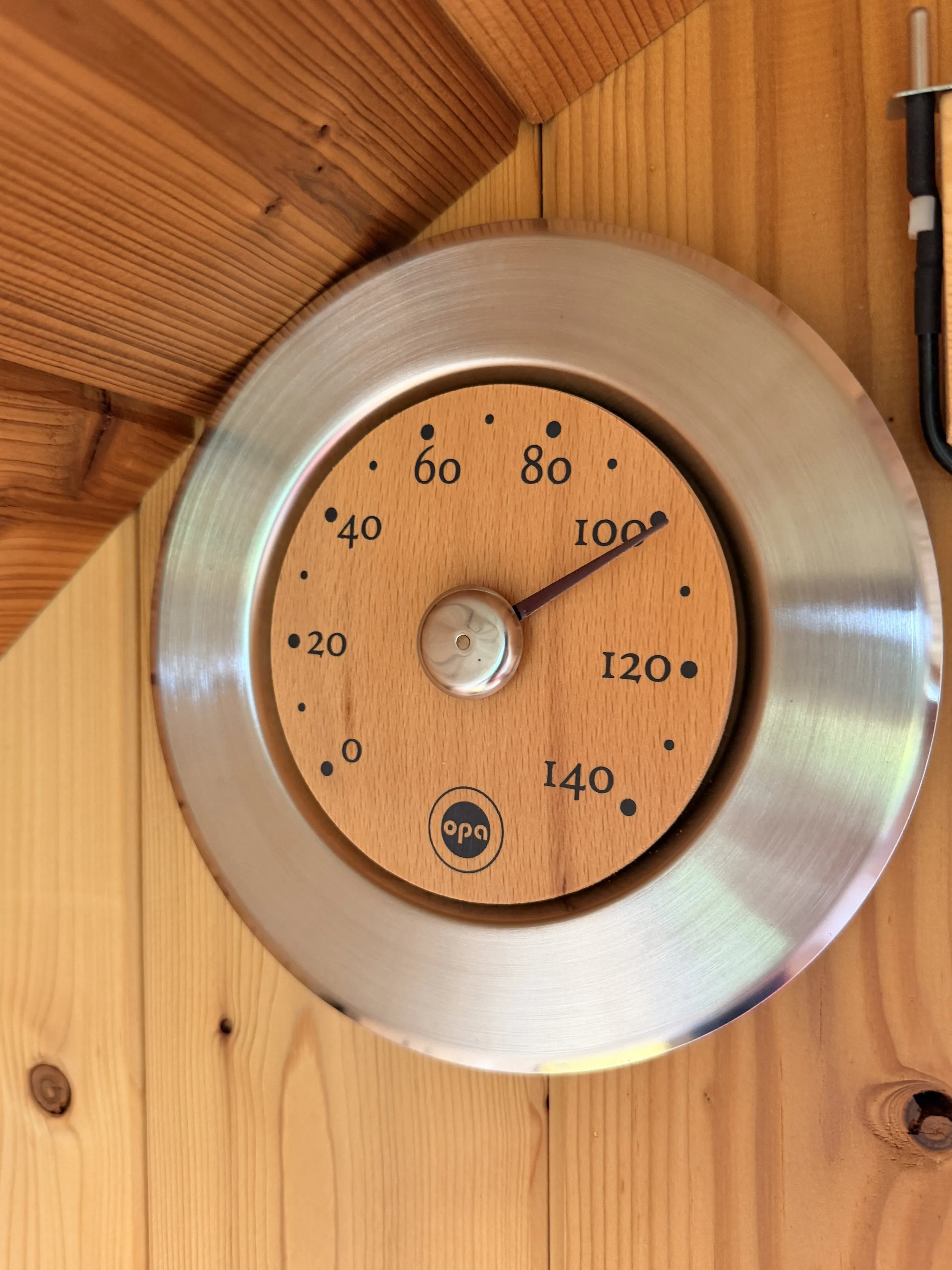
| Max temperature reached | 110°C (230°F) |
Three years in, these numbers haven’t drifted. The heater performs the same as day one — heat-up time is a good early-warning indicator of element health, so I’d notice.
Important: my heater is oversized. Mine is a Tylö Pure 8kW — significantly more powerful than the 4–6kW that typically ships with a 2m barrel. I didn’t plan this; I acquired the unit secondhand from a Japanese sauna facility. So treat my 20-minute figure as what a barrel can do with abundant power, not as what a stock barrel package will do. If you take one thing from this site: buy more heater than the minimum. The most common complaint about barrel saunas — lukewarm air, cold feet, weak löyly — is very often a complaint about an underpowered heater in a barrel, not about the barrel itself.
Why barrel saunas heat faster than cabins
This is the barrel shape’s genuinely underrated superpower: there are no corners to heat.
A rectangular sauna room has dead air pockets in every corner — volume you pay to heat but never sit in. A barrel wraps the walls tightly around the space you actually use. Less air, less wood surface stealing heat, faster climb. Friends with cabin-style saunas report 40–60 minute heat-ups with comparable heaters. Mine does it in a third to half the time.
Fairness requires the other half of the story: Finnish purists point out that what a barrel gains in heat-up speed, it partly gives back in heat distribution — low benches mean more head-to-toe temperature difference than a tall room with upper benches. They’re not wrong about the physics. What I can report is the measured result in mine: 20 minutes to 90°C, and with a strong heater and a ladle of löyly, warm enough everywhere that my body has never filed a complaint.
What the 20 minutes looks like in practice
The heat-up window isn’t waiting time — it’s prep time. My routine:
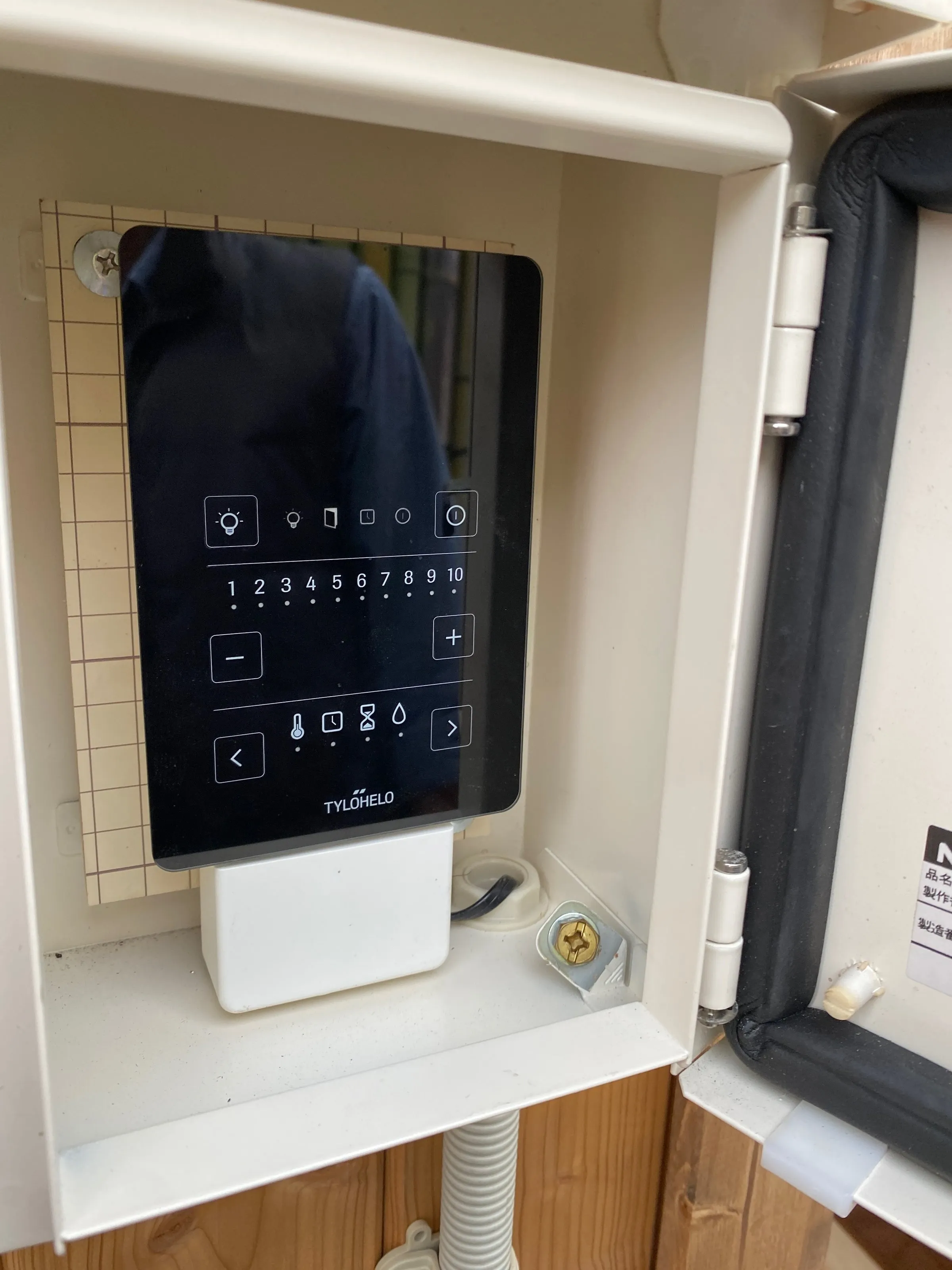
- Switch on the heater (panel control by the door)
- Fill the cast-iron cold plunge tub with tap water
- Set up the infinity chairs, towels, water bottles
- By the time the site is ready, so is the sauna
By minute 20 the thermometer reads 90°C and the first round begins.
Löyly: the 50ml trick
A barrel at 90°C with dry air and the same barrel after one 50ml ladle of water on the stones are two different saunas. That single pour spikes the humidity enough that sweat runs off your entire body within a minute or two. I’ve settled on ~50ml per pour as the sweet spot for this volume of space — enough steam to transform the room, not so much that it overwhelms the heater.
If your barrel “doesn’t feel hot enough” at temperature, the answer is almost never more degrees. It’s water.
What slows heat-up down (and what doesn’t)
Matters:
- Heater output, more than anything else. This is the variable most buyers under-spend on and most regret.
- Starting temperature. Winter’s extra 5–10 minutes is simply the cabin and stones starting colder.
- Doors open during heat-up. Obvious, but the number one rookie error.
Matters less than you’d think:
- Rain and humidity. Wet outside air barely moves the needle; the sauna is a sealed, insulated volume once the doors close.
- Wind. The aerodynamic shape doesn’t give wind much to grab.
How long does a wood-fired sauna take to heat up?
Full honesty: I run an electric heater, so I won’t invent firsthand wood-fired numbers. Based on research and other owners’ reports, a wood-fired sauna typically takes 45–60 minutes or more to reach temperature — and that’s after you’ve built, lit, and started feeding the fire. Call it 30–60+ minutes of active work, against roughly 20 minutes of hands-off heat-up for a barrel with a strong electric heater.
Wood-fired has genuine magic — the crackle, the smell, going fully off-grid — and plenty of owners happily trade the time for it. But if “sauna-ready on a Tuesday night without tending a fire” is the goal, electric wins that specific contest, and it isn’t close.
The practical takeaway for buyers
If heat-up time matters to you — and if you’re busy, it should — the barrel-plus-electric combination is hard to beat: flip a switch, do your prep, and you’re sweating in 20 minutes, no fire-tending required. Wood-fired stoves have their own magic, but as the numbers above show, they ask for 30–60+ minutes of lighting and feeding before you ever sit down.
For a sauna you’ll actually use on a random Tuesday evening, fast heat-up isn’t a luxury spec. It’s the difference between “I’ll sauna tonight” and “maybe this weekend.”
Worried about the electric bill? Here’s what it actually costs to run: the real numbers. Full ownership story and the honest 3-year review: read it here.
Fast heat-up is one of the barrel’s answers to the Finnish critique. The full physics debate — and where the barrel genuinely loses — is here.