Totonou: The Japanese Sauna State That Doesn't Translate
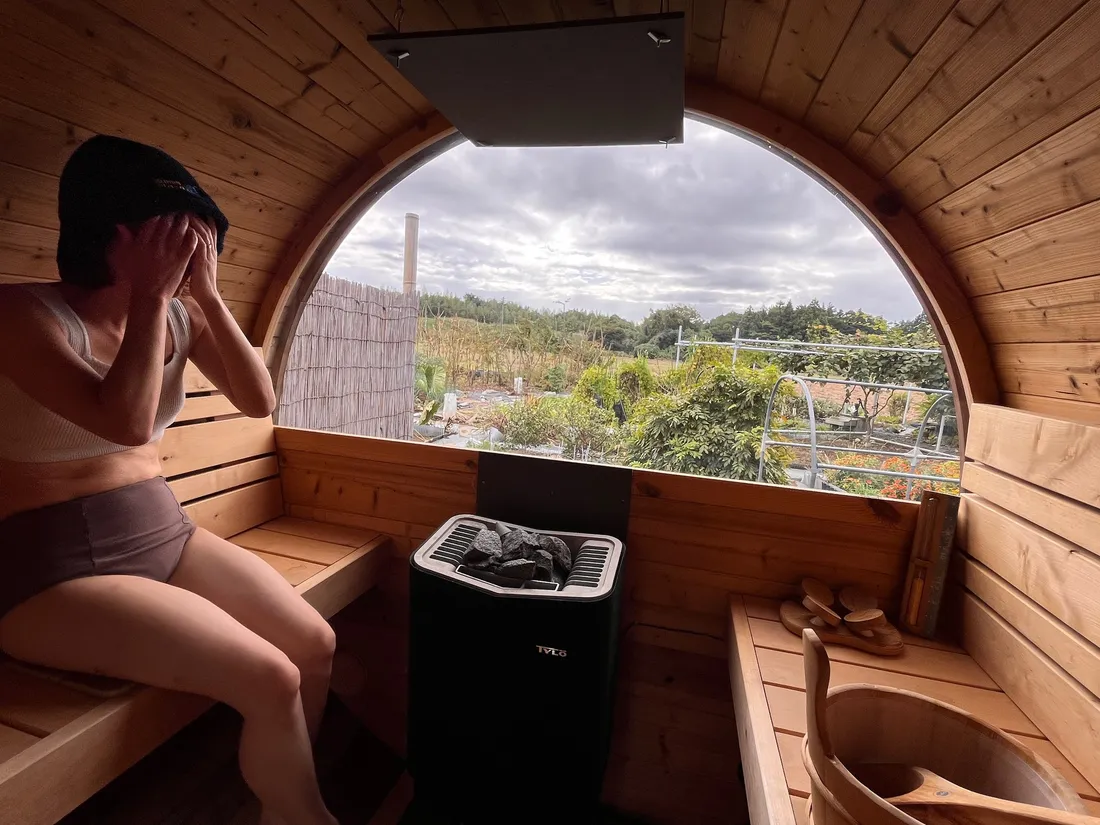
The short version: Totonou (ととのう) is the Japanese word for what happens a few minutes into the rest phase after sauna and cold water — a wave of deep physical calm and mental clarity that Japanese sauna culture treats as the entire point of the ritual. It literally means “to be put in order.” Relaxation is the wrong translation. This is a guide to what totonou is, the three-round ritual built around it, and how I chase it in my own backyard barrel — no Japanese bathhouse required.
What the word actually means
In everyday Japanese, totonou means to be arranged, settled, put in order — a room gets totonou-ed, paperwork gets totonou-ed. Sauna culture borrowed it for the moment when you get put in order: heat, cold, and rest, applied in sequence, until body and mind click back into alignment.
The sensation itself, when it lands: limbs heavy and humming, skin tingling, thoughts quiet without effort, a strange simultaneous alertness and peace. Japanese sauna enthusiasts describe it as a wave that arrives one to two minutes into the rest phase and lasts several more. You don’t force it. You build the conditions and it visits.
If you’ve spent time in fitness circles you’ve heard adjacent ideas — “post-sauna high,” contrast-therapy calm. Totonou is that phenomenon, but with a name, a method, and decades of Japanese practice refining how to get there reliably: sauna arrived in Tokyo’s bathhouses in the 1950s and went mainstream when it was installed in the athletes’ village at the 1964 Tokyo Olympics. Japan has been quietly iterating on the ritual ever since.
The method: three rounds, three phases
The standard Japanese protocol is beautifully simple. One “set” is:
- Sauna — until well heated. For me: 90°C (194°F), with a 50ml ladle of water on the stones (löyly) when I want sweat running within minutes. Leave when your pulse is clearly up, before misery. Roughly 8–12 minutes for most people.
- Cold water — shorter than you think. The mizuburo (水風呂, cold bath). Mine is a cast-iron tub filled with plain tap water. In, breathe out slowly, stay until the cold stops shouting and starts whispering — often under a minute.
- Rest — the phase that IS the point. Gaikiyoku (外気浴), outdoor air rest. Lie back, close your eyes or don’t, and do absolutely nothing. This is where totonou happens. Five to ten minutes minimum. In Japan, skipping or rushing this phase is considered the classic beginner’s mistake — people treat the sauna as the event, when it’s only the setup.
Repeat for three sets. Most Japanese practitioners find the wave lands hardest on the second or third rest.
Why the rest phase gets a name of its own
Gaikiyoku means “outdoor air bathing,” and the choice of word is deliberate — you’re bathing in air the way you’d bathe in water. The Japanese insight is that natural airflow on cooling skin is an active ingredient, not just a place to sit.
My gaikiyoku setup is an infinity chair on family land in the countryside, where the wind arrives across open fields. On rainy days we pitch a tarp and run an electric fan — artificial wind, same principle, and honestly some of the best sessions of the year happen under that tarp. Why rain days are secretly the best.
If your rest spot has no breeze, add one. A fan is not cheating. Still air is.
What I do differently in my own barrel
Owning the sauna lets me tune things a Japanese facility can’t:
- The window faces a vegetable field. Watching green things grow while you sweat does something a tiled wall cannot.
- Tap-water mizuburo, no chiller. Japanese facilities pride themselves on 15–17°C water. My cast-iron tub runs with the seasons, and I’ve stopped minding — the ritual works across a range.
- The afterglow round. After the final set, the barrel stays warm for a long time on residual heat. We sit inside — heater off, gentle leftover warmth — with drinks and slow conversation. We call it yonetsu (余熱, “residual heat”), and among my friends it’s become as loved as the sauna itself.
Common questions
Is totonou just endorphins/the science thing? Probably some cocktail of heat-shock response, cold-triggered catecholamines, and parasympathetic rebound during rest — but I’ll leave mechanisms to researchers. What the Japanese tradition contributes isn’t a mechanism. It’s a method: the discipline of the third phase.
Can you totonou in any sauna? Yes. The word travels. Heat, cold, genuine rest with airflow, repeated — a gym sauna and a cold shower can get you there. A barrel with a field view just stacks the deck.
How do I know if it happened? You won’t ask. The first real one is unmistakable — most people laugh, involuntarily.
The barrel that made me take all this seriously — full 3-year review: read it here.