Barrel Sauna in the Rain: Why Wet Days Became My Favorite Sessions
The short version: After three years of owning a barrel sauna through Japanese rainy seasons and typhoons, rain hasn’t damaged anything, doesn’t slow the heat-up, and requires zero special maintenance afterward. Better: rain on the barrel roof might be the best sound in the world. Here’s what wet weather actually does to a barrel sauna — and how we turned rainy days into the sessions we look forward to most.
First, the worry everyone has: does rain hurt the sauna?
Short answer from three years in one of the wettest developed countries on Earth: no.
- The shingle roof sheds everything. Bitumen shingles over the curve, water runs straight off. No pooling anywhere, because there’s no flat surface to pool on. After three years: no leaks, no lifted shingles.
- The barrel shape has no weak points for water. No flat roof seams, no eaves collecting drips, no window sills holding puddles. Rain hits, rain leaves.
- Post-rain maintenance: none. I get asked what I do after Japan’s weeks-long rainy season. Honestly? Nothing. I open the doors after sessions like always, and the interior stays dry. (If you want the full damage report from three years — one LED light and some faded paint — it’s here: every problem, honestly.)
One nuance worth knowing: the real weather enemy at our site turned out to be dust-carrying wind, not rain. Rain washes the sauna; gritty wind sands the paint. If your site is exposed and dry, worry about that instead.
Does rain slow the heat-up?
Barely. Once the doors close, the barrel is a sealed, insulated volume — outside humidity is irrelevant to the air you’re heating inside. My real numbers (about 20 minutes to 90°C in summer, 25–30 in winter) hold in the rain. Cold matters; wet doesn’t. Full heat-up data here.
Why rain sessions are the best sessions
Here’s the part no spec sheet captures. Inside a barrel at 90°C, the roof is inches above your head — and when rain falls on those shingles, you’re sitting inside a drum.
It’s not noise. It’s a soft, constant percussion that makes the heat feel more like shelter. The panorama window shows grey sky and wet fields; inside is 90 degrees and cedar-scented steam from a ladle of löyly. The contrast between what you see and what you feel is the whole magic of sauna, and rain turns it up.
In Japanese sauna culture there’s a word for the deep-reset state this all leads to — totonou — and I’m convinced rainy days get you there faster. What totonou actually means.
The rainy-day rest phase: tarp + fan
The one thing rain does complicate is gaikiyoku — outdoor air rest between rounds. Our solution is stupidly simple and works perfectly:
Pitch a tarp, put the infinity chairs under it, and run an electric fan.
The fan replaces the natural breeze that makes countryside gaikiyoku so good. You lie back dry under the tarp, artificial wind on cooling skin, rain drumming on the tarp above and the barrel beside you. It sounds improvised because it is — and I now genuinely prefer it to some clear-day sessions.
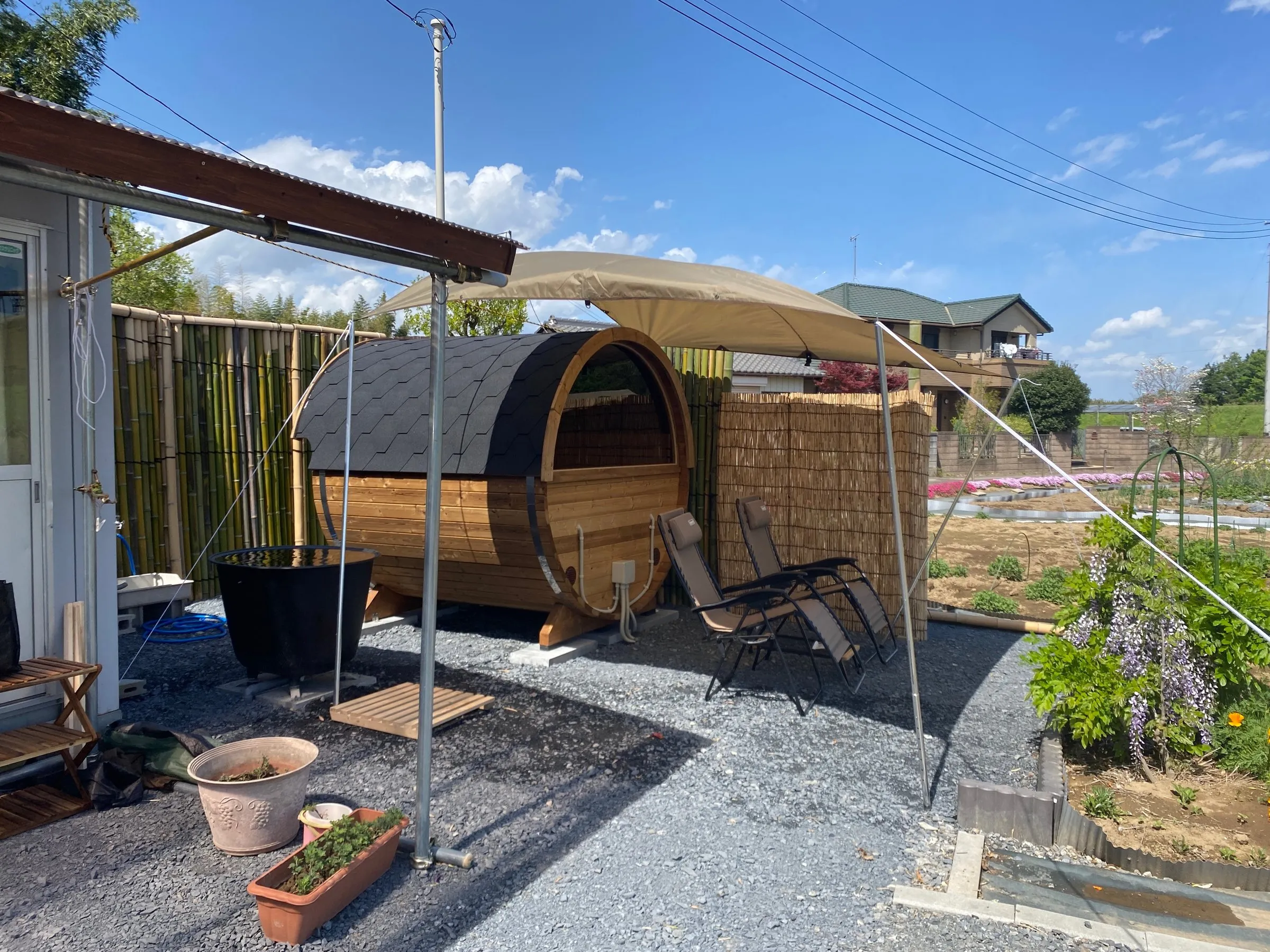
If you’re building a rain kit for your own sauna: any camping tarp, two poles, and an outdoor-rated fan will do — a basic version comes in under $150 and unlocks roughly a third of the calendar. Mine, for the record, is fancier than it needs to be: an Ogawa tarp and a Snow Peak fan, both Japanese outdoor brands I already loved. The premium gear makes it nicer; it doesn’t make it work better.
The takeaway
Don’t buy a barrel sauna despite rain. The construction genuinely doesn’t care, and the sessions get better. The only planning rain requires is for the rest phase — and a tarp solves that for less than the cost of one nice dinner.
The full 3-year ownership review, costs and all: read it here.