How Long Do Barrel Saunas Last? An Honest Answer, 3 Years In
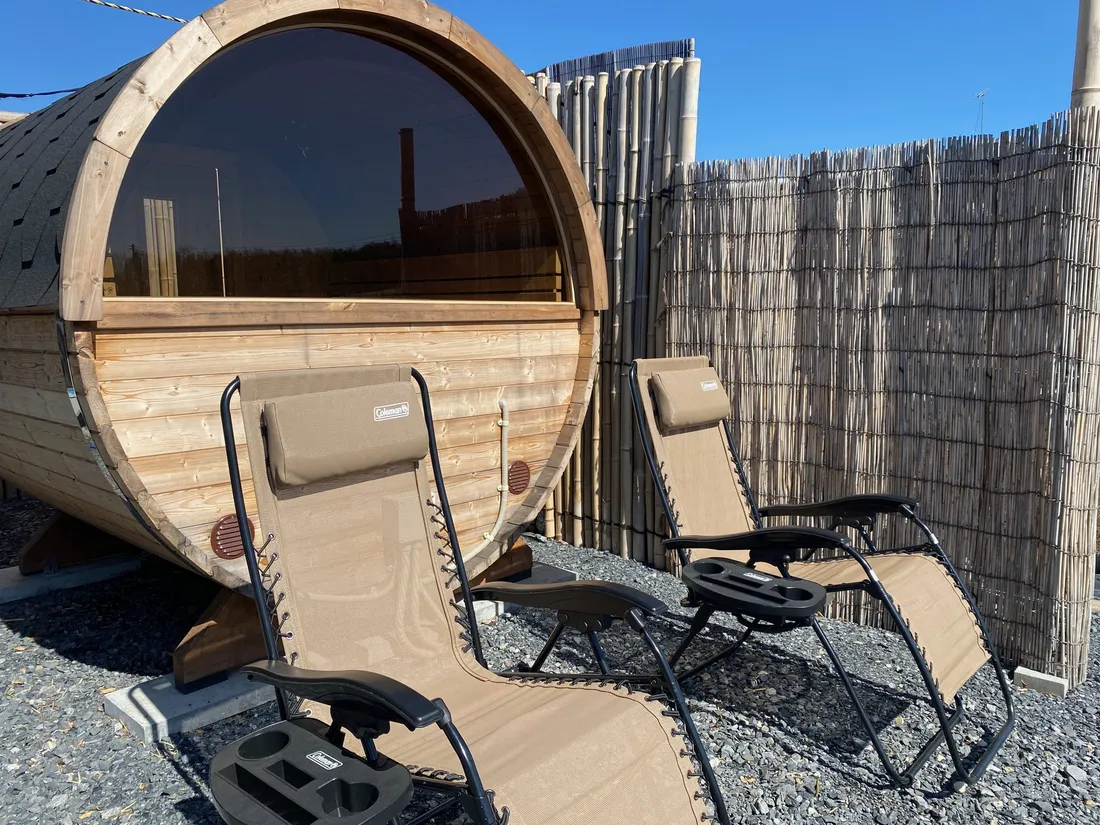
The short version: A well-built barrel sauna, maintained properly, should realistically last 15–20 years or more. But the wood is rarely what gives out first — the finish, the seals, and the heater reach the end of their lives long before the structure does, and all three are replaceable. What actually kills saunas isn’t the design; it’s neglect. Three years into owning an Estonian-built barrel in one of the harshest climates for wood, my structural deterioration is essentially zero.
I’ve owned mine for three years, not twenty. So below I separate carefully: what I’ve measured myself, and what comes from research and other owners’ reports.
The realistic lifespan range
Based on research and owner reports, the numbers cluster like this:
| Type | Typical lifespan |
|---|---|
| Cheap barrel kits, thin wood | ~10–15 years |
| Quality barrel saunas, maintained | 15–25 years |
| Thermowood (thermally modified) | 20–25+ years |
| Well-maintained cedar | 20–30 years |
| Electric heater element | 10–20 years (replaceable) |
That last row is the one people miss. A sauna doesn’t die when its heater does — you replace the heater and keep the building. Multiple sources make the same point: heating elements wear out but are swappable, which extends the sauna’s total life well past the heater’s own.
The spread between “10 years” and “25+ years” isn’t mostly about brand. It’s about maintenance, siting, and climate — three things you control more than you think.
What actually dies first (it isn’t the wood)
This is the part I’d want to know as a buyer, and it’s rarely stated clearly. Based on research and owner reports, the usual order of failure:
- The exterior finish. Always first. UV and rain wear it down in a few years, and on a barrel specifically, the top staves age fastest — they take the most direct rain and sun. Cosmetic at first, structural if ignored for years.
- Seals and gaskets. Door seals and glass gaskets harden with repeated heat cycling. Cheap to replace, easy to forget.
- The heater element. 10–20 years. A consumable, not a coffin.
- Electrical bits. Lights, controls, wiring. (Mine’s contribution to this list so far: one dead LED bulb.)
- The wood structure. Last. If the four things above are handled, the barrel itself outlives them all.
Notice that four out of five are serviceable parts, not the building. A barrel sauna doesn’t so much expire as it accumulates small overdue repairs until someone decides it’s not worth it.
My three years, measured
Here’s my own data — Estonian-built Tesler barrel, Estonian spruce, installed April 2023 in rural Japan:
- Structural deterioration: none I can find. No warping, no gaps between staves, no rot, no soft spots. The tension bands still hold everything tight through three full summer-winter cycles.
- Mechanical failures in three years: one LED light. The heater, door seal, benches, glass and bands are all untouched.
- The finish faded in about two years, which was expected. We repainted it as a family with the same Estonian-made paint the factory uses — one weekend, paint and brushes. The full damage report is here.
- My climate is a genuine stress test. Japanese summers deliver intense UV and weeks near 100% humidity, then typhoons arrive sideways. There’s an extra factor at my site I didn’t anticipate: wind carrying fine dust off the surrounding fields, which wears the finish like slow sandpaper. And I can confirm the pattern the research describes: the fading is not uniform. Where the sun and the dust-carrying wind hit hardest, the finish goes first — which is exactly why the top staves are worth watching. If Estonian spruce survives this, it will survive most backyards on Earth.
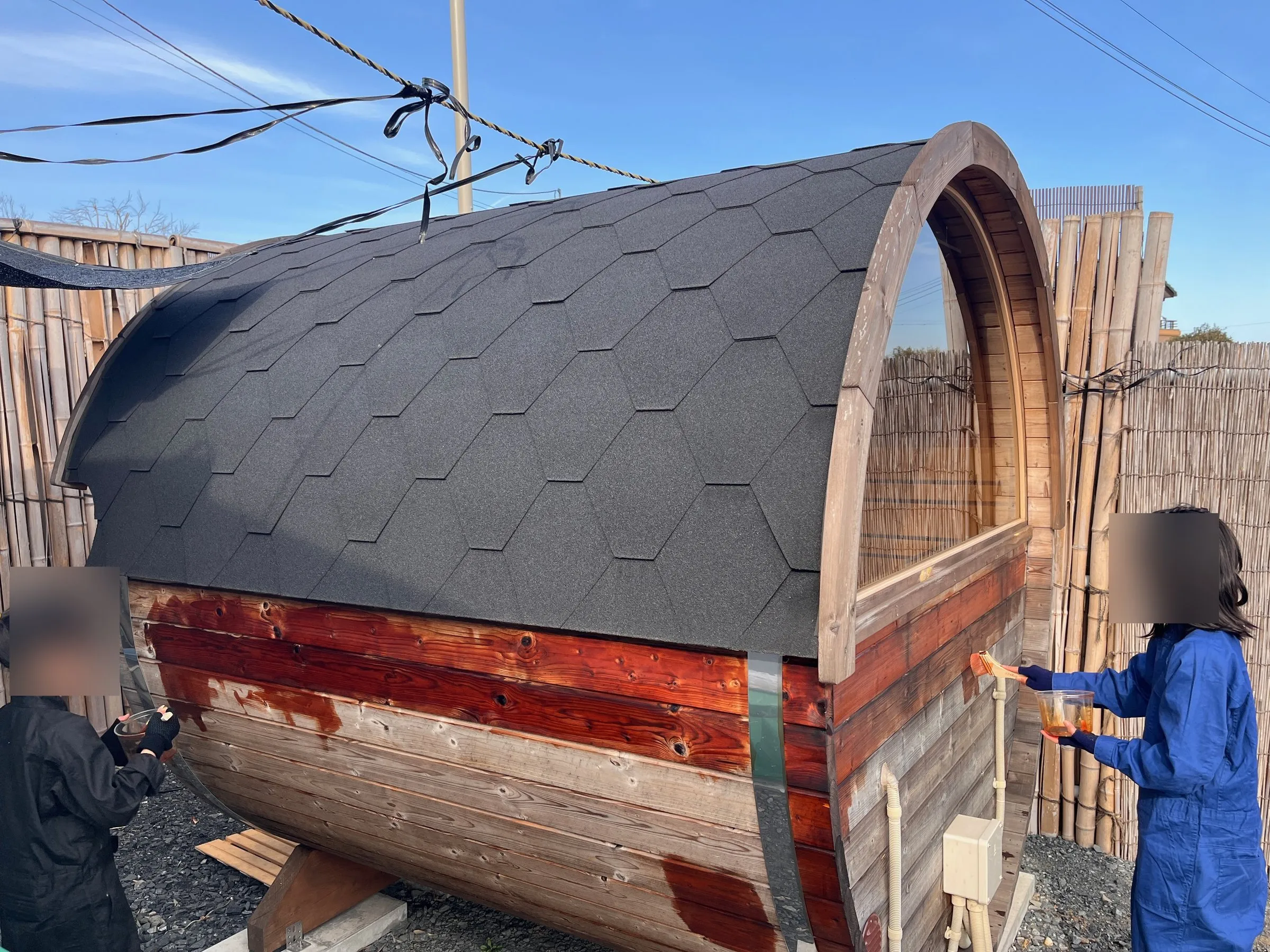
Three years is not twenty. But three years is long enough to see whether a sauna is heading toward twenty, and mine shows no sign of anything but paint work in its future.
What actually shortens a barrel sauna’s life
The honest section. Every one of these is avoidable, which is exactly why they’re worth naming:
1. Not ventilating after sessions. The single biggest cause of rot, and the cheapest to prevent. Wet wood that can’t dry is how a sauna dies young. I open the doors after every session and wipe the benches with a dry towel. That’s the entire anti-rot program, and three rainy seasons later there’s no mold anywhere.
2. Skipping the repaint. The finish is a sacrificial layer — it’s supposed to wear out. Let it go for five or six years in a harsh climate and the UV starts working on the wood itself. Repainting every 2–3 years isn’t upkeep of appearance; it’s how the structural clock gets reset.
3. Cheap wood on a cheap kit. Thin, untreated, low-grade lumber is where the “10 years” end of the range comes from. This is decided at the moment of purchase and can’t be maintained away.
4. Bad siting. Saunas placed directly on soil, without drainage or a foundation, rarely reach their potential lifespan. Mine sits on a proper foundation — one of the “hidden costs” nobody warns you about, and one that pays for itself in years.
5. Neglect disguised as ownership. Finnish sauna people talk about the grim abandonment rate of store-bought sauna kits — bought with enthusiasm, used for a couple of years, then quietly becoming storage sheds. A sauna that isn’t used doesn’t get ventilated, doesn’t get repainted, and doesn’t get noticed when something small goes wrong. The most common cause of a short sauna life is that the owner stopped caring.
How to make a barrel sauna last longer
Four things. None of them expensive:
- Ventilate after every session. Doors open, let it dry completely. Free.
- Repaint or re-treat every 2–3 years in harsh climates, less often in mild ones. A weekend and a can of the manufacturer’s recommended finish.
- Check the seals annually. Door gasket, window seal — they harden with repeated heat cycling and are cheap to replace. Full disclosure: three years in, mine haven’t needed attention and I haven’t been formally checking them. This one is on my list, not my track record.
- Look at the top staves. They weather fastest on a barrel. If the finish is going anywhere first, it’s up there — so that’s your early-warning system for when a repaint is due.
Do those four and the wood, honestly, mostly takes care of itself.
Verdict
The design is long-lived. Whether yours reaches twenty years is a question about you, not the barrel.
Buy decent wood, put it on a proper foundation, open the doors when you’re done, and repaint it before it starts looking sad. Do that and a quality barrel sauna will very likely outlast its own heater — possibly twice.
Three years in, mine looks like it’s just getting started. Ask me again in 2043.
The full three-year ownership story, with real costs: read it here. Everything that has gone wrong so far: read it here. And if you’re still deciding on the shape: barrel vs cabin.