Barrel vs Cabin Sauna: An Honest Comparison from Someone Who Owns the "Wrong" One
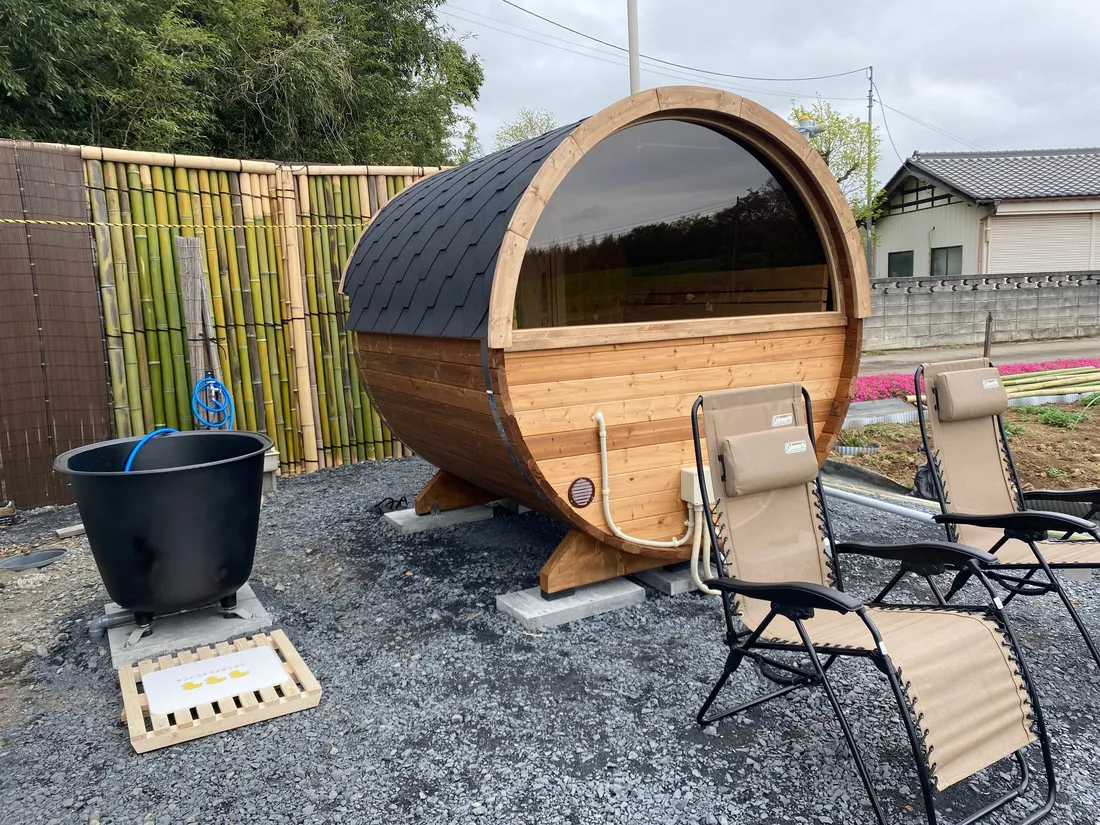
The short version: If you optimize purely for sauna performance — löyly quality, even heat, good ergonomics — a cabin-style sauna is the better instrument, and I’m not going to pretend otherwise. If you optimize for fast heat-up, weather resilience, easy siting, and something you’ll still love looking at in year three, the barrel makes a real case. And there’s a third variable that matters more than the shape: the heater you put in it. Here’s the comparison I wish I’d read before I bought.
The comparison, at a glance
| Barrel | Cabin / Cube | |
|---|---|---|
| Löyly quality & even heat | Compromised: low benches, feet in the cool zone | Winner. Tall ceiling, upper benches, whole body in the good air |
| Heat-up time | Winner. ~20 min to 90°C in mine (with an oversized heater) | Typically 40–60 min for comparable power |
| Ergonomics (sitting) | Curved wall pushes head forward; ends are better than sides | Winner. Flat walls, proper backrests |
| Ergonomics (lying down) | Winner. The curve was made for it | Depends on bench length |
| Weather resilience | Winner in my experience. No flat roof, no eaves, nothing for water to pool in | Good, but more seams and surfaces |
| Price (2026) | Winner. Still meaningfully cheaper for comparable capacity — I checked, and the “barrels aren’t cheaper anymore” claim doesn’t hold up (see below) | Consistently more expensive: more material, more shipping |
| Siting & footprint | Self-supporting outdoor object; no foundation slab required in many cases | Often smaller. Small cube kits take less space than a barrel and can be installed indoors |
| Assembly | ~1 day; ours went up in a day with a specialist crew | Often quicker for small kits. Modular cube/cabin panels can go up in a few hours to half a day |
| ”Do I still love it in year 3?” | Winner (see below — and yes, this is a real criterion) | Sober, functional, less charming |
Where the cabin genuinely wins (read this part twice)
Finnish sauna design has a first principle sometimes stated as the Law of Löyly: your feet should be above the stones. Heat stratifies; the good, steam-carrying air lives in the upper third of the room. A well-built cabin lifts your entire body — feet included — into that layer, using height and an upper bench.
A barrel cannot do this. The curved wall forces low benches; your feet hang into the coolest air in the room. Head warm, ankles cool. This is not a myth invented by purists — it’s geometry, and if you buy a barrel, you are choosing it with this trade-off attached. I wrote a whole article taking the Finnish critique seriously.
The cabin also wins on sitting posture (flat wall behind your back, not a curve pushing your head forward), and on the ability to build in real height and a proper convection loop.
If sauna performance is your single optimization target and you have the budget and space: build the cabin. I’d rather lose an affiliate commission than send you toward the wrong purchase.
One criticism that doesn’t survive a price check
There’s a fourth argument you’ll see constantly in sauna forums, usually stated as settled fact: “Barrels used to be cheaper, but cube kits cost about the same now, so there’s no reason left to buy a barrel.”
I’d repeated a version of this myself. Then I actually checked, and it isn’t true — at least not in the 2026 US market.
- One manufacturer that builds both shapes prices its barrels around $9,800 built out, against roughly $15,500 for its cubes. Same company, same standards, same catalog.
- Across the market, outdoor cabin and cube kits generally start around $8,000, while barrels run from roughly $2,500 entry-level to $4,000–7,000 for mid-range cedar.
- The reason is structural, not marketing. A cabin or cube needs more material — flat walls, a roof structure, thicker panels — and it ships as pre-built wall sections on multiple pallets. A barrel ships as a flat stack of identical staves and a hardware kit. That logistics gap is real and lands directly in the price.
In the $3,000–6,000 range, you will almost always get more sauna per dollar in a barrel. That’s not a defense of the shape’s physics — the Finns are still right about the physics. It’s just a reminder that in an argument this heated, not every claim on the winning side happens to be true.
One honest caveat, though: entry-level cube kits have been getting cheaper, and at the small, indoor end the gap narrows. Compare the specific models you’re choosing between — not the shapes in the abstract.
The variable that matters more than the shape: heater output
Here’s the thing that reframed this entire comparison for me.
My barrel heats to 90°C in about 20 minutes and delivers löyly strong enough that one 50ml ladle has sweat running down my legs. That performance is not because barrels are magic. It’s because my heater is a Tylö Pure 8kW — roughly double what a 2m barrel usually ships with (4–6kW is standard). I got it secondhand from a Japanese sauna facility. It was luck, not planning.
Which means the honest version of the barrel-vs-cabin debate isn’t shape vs shape. It’s this:
- Barrel + minimum-spec heater = the disappointing, lukewarm, cold-feet sauna the critics describe. Genuinely. Don’t do this.
- Barrel + abundant power = a fast, hot, properly steaming sauna that has kept me and dozens of guests happy for three years.
- Cabin + good heater = the best sauna of the three, and the most expensive path in money, space, and effort.
If your budget forces a choice between “barrel with a strong heater” and “cabin with a weak one,” take the barrel. Power beats geometry in practice, even though geometry wins on paper.
Where the barrel genuinely wins
Heat-up speed. The barrel’s small volume — the same trait that limits bench height — means less air to heat. Mine is sauna-ready in 20 minutes; cabin-owning friends report 40–60. This sounds like a spec-sheet detail until you realize it’s the difference between “I’ll sauna tonight” and “maybe this weekend.” My real heat-up data, summer and winter.
Weather. Three Japanese rainy seasons, several typhoons, zero damage. The round shape has no flat roof, no eaves, no window sills — nothing for water to sit in. Three years of maintenance, honestly.
Siting. Compact, self-supporting, and it went up in a single day. This is a genuine advantage over a large outdoor cabin — but be honest with yourself about the specific model you’re comparing: a small cube kit is just as easy to place, takes less room than a barrel, and can even go indoors. The barrel’s siting edge is real against big builds, not against every cabin.
And yes: charm. I’m going to defend this as a real criterion, because I’ve seen the data cut the other way. Finnish sauna people will tell you that store-bought sauna kits have a grim abandonment rate — bought with enthusiasm, used for a couple of years, then quietly become storage sheds. No amount of löyly optimization fixes that, because abandonment isn’t a thermodynamics problem — it’s a relationship problem.
My barrel is kawaii. The round shape is lovable. Guests photograph it before they’ve been inside. My family repainted it by hand one weekend. Three years in, we still drive 25 minutes to use it. Whatever the löyly equations say, a sauna that gets used beats a better sauna that doesn’t.
Which one are you?
Buy a cabin or cube if:
- Löyly quality is your top priority — this is the shape that gets the physics right
- You’re tall, or plan long upright sitting sessions
- You want the option to install indoors, or the smallest possible footprint — a small cube kit takes less space than a barrel and can sit inside
- You’d rather assemble modular panels — often a few hours to half a day for a small kit — than raise a barrel. Cube kits have also come down in price and are no longer the automatically-pricier option they once were
Buy a barrel if:
- You want a sauna running in 20–30 minutes on a weeknight
- Your site is outdoors and exposed to weather — the seamless round shell shrugs off rain and typhoons with no vulnerable seams
- You’ll pair it with a genuinely strong heater (this is non-negotiable)
- The round shape makes you happy every time you see it — and you know that this is a legitimate reason
Buy neither yet if:
- You haven’t sat in both. Find a facility with each, if you possibly can. An hour of experience beats a month of forum reading.
What I actually bought, and what I’d tell you to buy
I bought the barrel. Three years later, one dead LED, a family repaint, and dozens of gatherings later, I’d buy it again — with the heater sized deliberately this time instead of by accident.
If you’re going barrel, the priority order is: heater output first, build quality second, shape aesthetics third, and price fourth. Most buyers reverse that list, and most regret it.
Barrel sauna kits
Typical price: $2,500 (entry) – $7,000 (mid-range cedar)
Best value per dollar in the $3,000–6,000 range. Whatever you choose, spend the savings on heater output, not shape upgrades.
I'll name a specific kit here once my affiliate partners are approved and I've vetted them. I don't recommend gear I haven't stood behind.
Compare current optionsCabin / cube sauna kits
Typical price: from ~$8,000
The better instrument if löyly quality is your single target and the budget, space, and build complexity are acceptable.
I'll name a specific kit here once my affiliate partners are approved and I've vetted them. I don't recommend gear I haven't stood behind.
Compare current optionsCold plunge to pair with either
Typical price: $1,500 – $5,000+ (a chiller is optional, not required)
I run a cast-iron goemon tub on plain tap water with no chiller. In a cool climate that's genuinely enough; a chiller buys you year-round cold.
I'll name a specific kit here once my affiliate partners are approved and I've vetted them. I don't recommend gear I haven't stood behind.
Compare current optionsThe full 3-year ownership story, with real costs: read it here. And the article where I let the Finns make their case against my own sauna: read it here.