The Japanese Sauna Ritual, Step by Step: How I Run 3 Sets in My Backyard Barrel
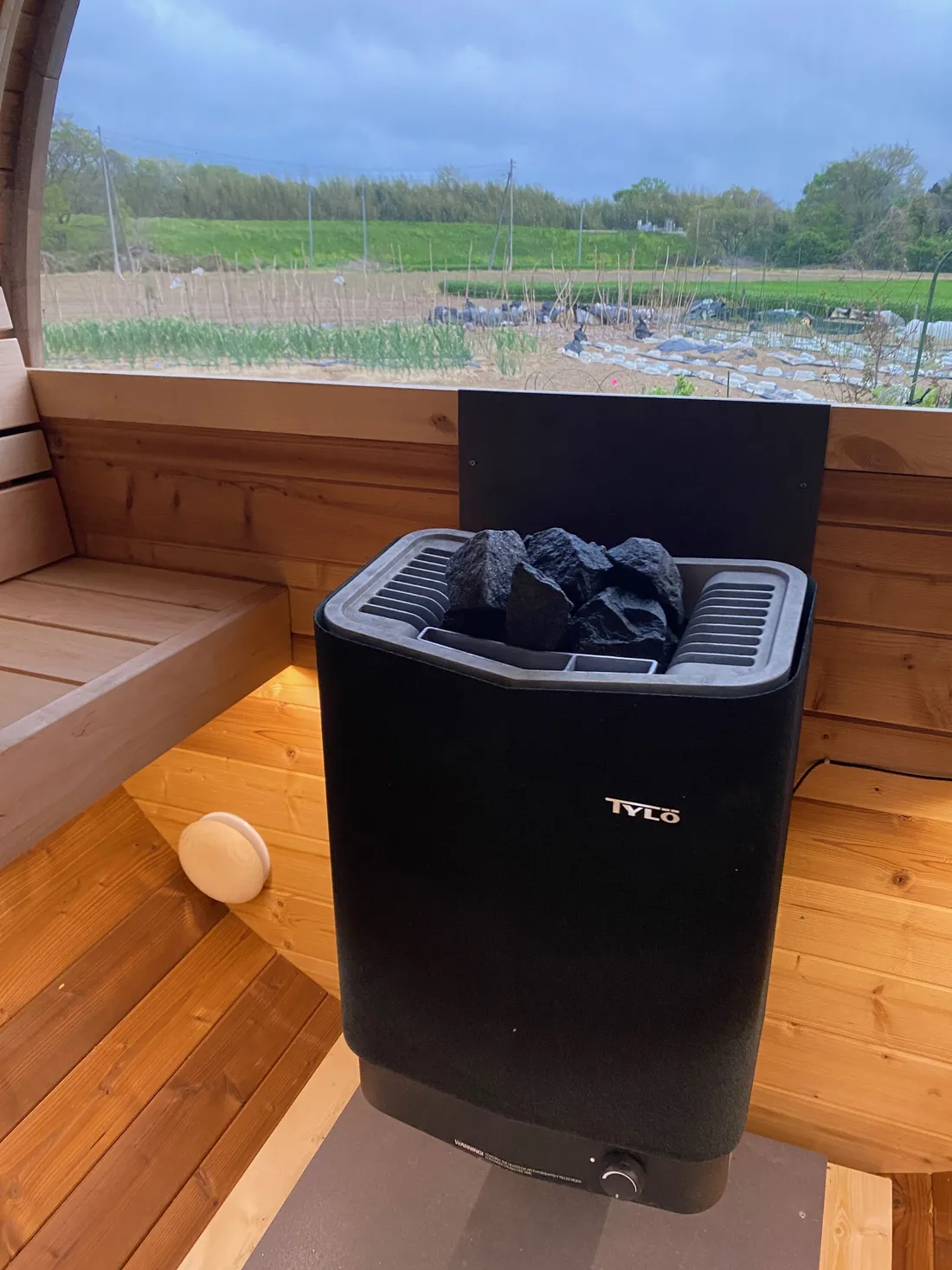
The short version: The Japanese method is three “sets” of sauna → cold water → outdoor rest, with strict respect for the rest phase. This is the exact sequence I run in my own barrel — times, temperatures, löyly amounts, and the small details that took three years to settle. Copy it as-is, then adjust to your body.
Before the first set
- Heat the sauna properly. Mine takes about 20 minutes to 90°C in summer, 25–30 in winter (real numbers here). Use that window as prep time, not waiting time.
- Fill the cold bath first. My cast-iron tub takes tap water only — no chiller. It should be ready before you’re hot, because standing around wet and warming up while a tub fills ruins the contrast.
- Stage the rest spot. Chair reclined, towel on it, water bottle within arm’s reach. Future-you, two rounds in, will not want to arrange furniture.
- Hydrate before, not just after. You’re about to lose more water than you think.
The set, in detail
Phase 1 — Sauna: 8–12 minutes at 90°C
Sit, settle, breathe slowly. Around the midpoint, I ladle about 50ml of water onto the stones — one pour. In a barrel’s compact volume, that single löyly transforms the room: humidity jumps and sweat runs off the entire body within a minute or two. If the room feels “hot but not working,” the answer is water, not degrees.
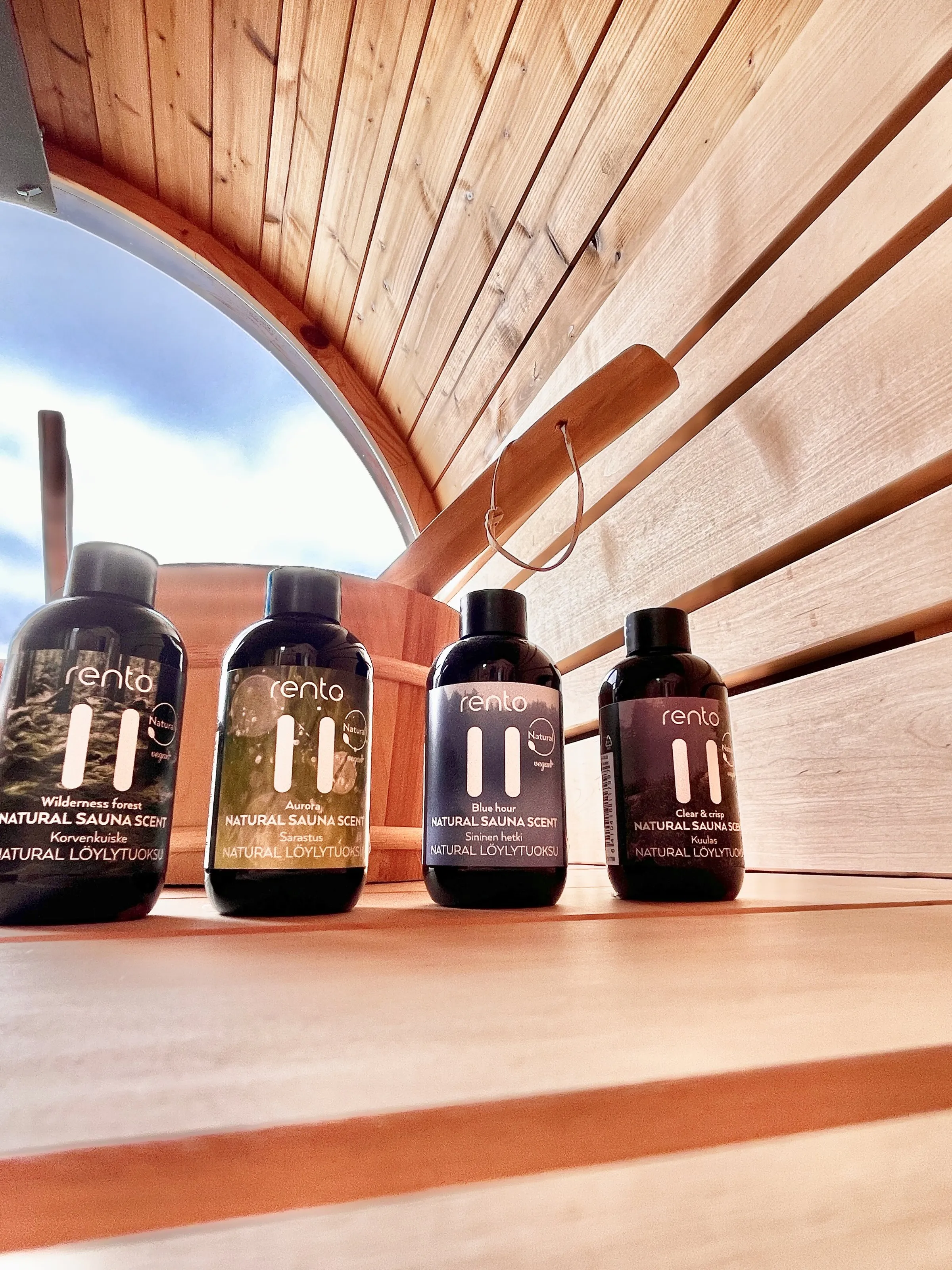
Small gear that earned its place over three years: I keep a set of Rento löyly scents (a Finnish brand) and pick one to match the evening’s mood — birch on some nights, citrus on others. There’s a wooden sauna pillow for lying flat along the bench, and a pair of eye-warming stones I picked up on a sauna trip to Finland and Estonia, which rest on closed eyelids while the löyly works. None of it is necessary. All of it stays.
Leave when your pulse is clearly elevated and before you’re negotiating with yourself. Toughing it out doesn’t deepen totonou; it just borrows misery from the next phase.
Phase 2 — Cold water: shorter than you think
Walk, don’t rush, to the tub. In slowly, exhale long. The cold shouts for ten seconds, then whispers. When it whispers, you’re done — for most people that’s 30–60 seconds. My tap-water tub runs warmer in summer and properly sharp in winter, and the ritual works across the whole range. You are not competing with anyone.
Phase 3 — Gaikiyoku: 5–10 minutes of genuine nothing
Lie back on the chair. Wind on skin — natural if you have it, a fan if you don’t (why airflow is the active ingredient). This is the phase Japanese culture treats as the point of the entire exercise, and where totonou arrives, usually a minute or two in (what that word means).
Do not check your phone. Do not plan the next round. The wave finishes on its own schedule.
Repeat × 3
Three sets is the Japanese standard, and my experience matches the folk wisdom: the second and third rests are where it lands hardest. The first set is the body’s system check; the later ones are the reward.
Between-set adjustments I’ve settled on:
- Sip water after every rest phase, before re-entering
- Slightly shorter sauna phases as sets progress — the body heats faster each round
- If a set feels wrong — or if the gaikiyoku is so good you don’t want to leave it — end at two. Some of my best evenings stopped at two sets because the rest phase won. The ritual serves you, not the reverse
And one house tradition worth stealing: next to the sauna we keep a container with a fridge inside, stocked for Oropo — Japan’s cult sauna drink, Oronamin C (a fizzy vitamin drink) mixed with Pocari Sweat (an electrolyte drink) over ice. One cold glass between sets, electrolytes and sugar and bubbles hitting a post-sauna body: it sounds absurd until you try it, and then it becomes non-negotiable. Japanese sauna facilities sell it at the counter; ours comes out of a fridge in a field.
After the third set: the yonetsu round
House specialty. After the final set, the barrel holds gentle warmth for a long time on residual heat. We go back in — heater off — with drinks, and talk in the soft leftover warmth. Yonetsu (余熱, “residual heat”) isn’t part of the official protocol, and it’s become my favorite part of the entire evening. If you own your sauna, this round alone justifies the purchase.
A note on who joins, from Japanese practice
In Japan, sauna generally isn’t recommended for children — the common-sense line here sits around junior-high age. At our sessions, the kids join for the warm-up window before the sauna is fully hot and again at the end for the food and the fire, and skip the hot rounds entirely. The ritual bends to the household; the sauna is the gathering place either way.
The whole evening, at a glance
| Step | Time |
|---|---|
| Heat-up + prep | 20–30 min |
| Set 1 (sauna/cold/rest) | ~20 min |
| Set 2 | ~20 min |
| Set 3 | ~20 min |
| Yonetsu round | as long as it lasts |
Call it two hours door to door for a full reset. Cheaper than therapy, and you get to watch the vegetables grow.
What this all runs in electricity: see the real bills. The 3-year ownership story, costs and all: read it here.